
Teenage Acne: Causes, Treatment and Tips for Parents
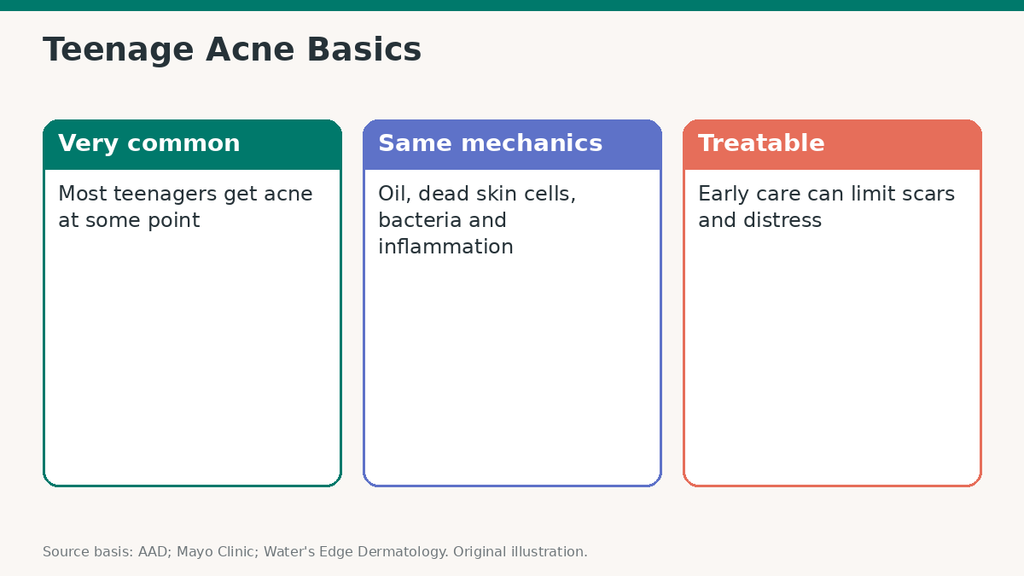
Teenage acne is one of the most common skin problems of adolescence. The American Academy of Dermatology (AAD) says most teenagers get acne. Water’s Edge Dermatology, citing AAD material, notes that more than 40 percent of adolescents have acne by their mid-teens. In other words, a teen with pimples is far from alone.
Sources: AAD – 5 ways to help your teenager survive acne; Water’s Edge Dermatology – Five tips for teens
Why Teenage Acne Happens
Mayo Clinic lists teenagers among the groups most often affected, and it names hormonal changes and family history among the risk factors. The biology is familiar. Oil and dead skin cells clog hair follicles, bacteria can grow in the plug, and the body reacts with inflammation. Dermatology Times describes the same three processes in clinical terms.
Sources: Mayo Clinic; Dermatology Times
Stress can add to the picture. The AAD says stress can cause acne to flare, and a large Wake Forest study of Singapore students found that high-stress teens were 23% more likely to have worse papulopustular acne. However, stress does not create acne from nothing. It tends to aggravate acne that is already there.
Sources: AAD – 5 ways to help your teenager survive acne; Wake Forest School of Medicine (2007); Mayo Clinic
The impact often reaches school and friendships. Water’s Edge Dermatology notes that acne can take a toll on a teen’s outlook, social adjustment and even school performance. Therefore, prompt attention is a kindness, not an overreaction.
Sources: Water’s Edge Dermatology – Five tips for teens
Take Teenage Acne Seriously
Telling a teen that acne will simply clear up can do more harm than good. The AAD explains that many studies link acne with lower self-esteem, and that teens with acne can be bullied. Moreover, self-esteem tends to rise when acne clears. Treatment can also prevent acne from worsening, and severe acne can leave permanent scars.
Sources: AAD – 5 ways to help your teenager survive acne; Water’s Edge Dermatology – Five tips for teens
The emotional side deserves attention too. DermNet states that acne can have profound social and psychological effects. The AAD adds that clearing acne can relieve depression and anxiety. Therefore, treating teenage acne early is about wellbeing as much as appearance.
Sources: DermNet; AAD – 5 ways to help your teenager survive acne
Daily Care for Teenage Acne
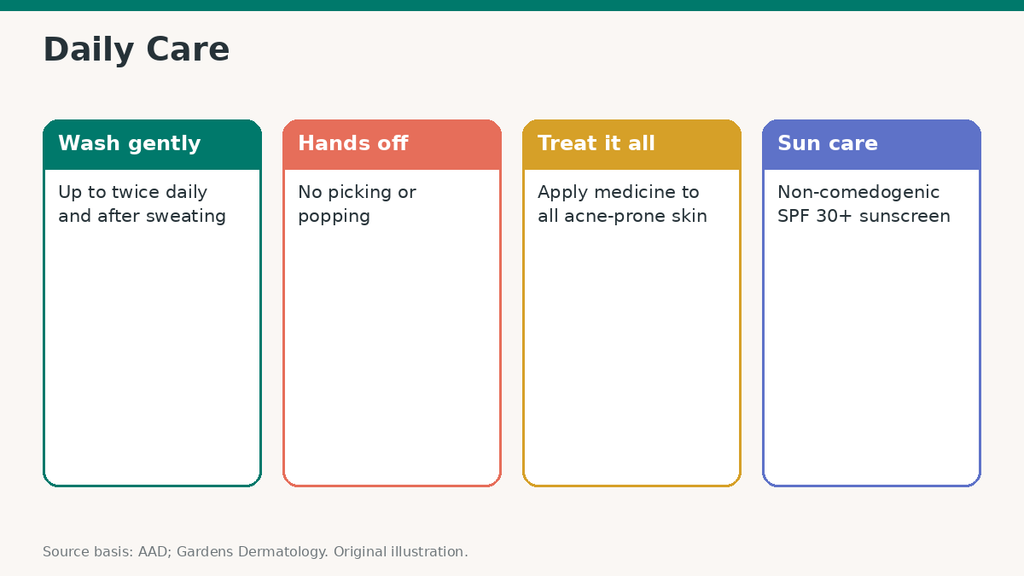
A gentle routine is the foundation. The AAD suggests washing the face up to twice a day and after sweating, using gentle, alcohol-free products, and choosing items labeled non-comedogenic. In addition, it warns that scrubbing hard or trying too many new products can irritate the skin and trigger breakouts.
Sources: AAD – Tips for managing acne; AAD – 10 habits that worsen acne
Habits matter as much as products. Avoid picking at or popping pimples, because this raises the chance of scarring. Dermatologists at Gardens Dermatology also advise spreading acne medicine over all acne-prone skin, not only on active blemishes. Furthermore, keeping hands away from the face reduces needless irritation.
Sources: AAD – Acne scars; Gardens Dermatology via CBS12; AAD – Tips for managing acne
Sun protection belongs in the routine as well. The AAD recommends a broad-spectrum, water-resistant sunscreen with SPF 30 or higher, and it warns that some acne medicines make skin more sensitive to ultraviolet rays. Teens who play sports or spend time outdoors should reapply as needed.
Sources: AAD – Tips for managing acne
Teenage Acne Myths Worth Dropping
Several popular beliefs do more harm than good. Mayo Clinic states that eating chocolate or greasy food has little to no effect on acne, and that acne is not caused by dirty skin. Moreover, scrubbing harder does not help. The AAD warns that washing too often or scrubbing can irritate the skin and make breakouts worse.
Sources: Mayo Clinic; AAD – 10 habits that worsen acne
Diet is a more nuanced topic. A systematic review in JAAD International found that high glycemic load was associated with acne, with a modest effect, while the evidence on dairy was mixed. Even so, teens should avoid extreme diets, and food changes should never replace proven treatment.
Sources: Diet and acne: a systematic review (JAAD International)
Teenage Acne on the Back and Chest
Many teens also get breakouts on the back and chest. The AAD advises wearing loose-fitting cotton or sweat-wicking clothes for workouts, and showering and changing clothes soon after sweating. In addition, it recommends being gentle when washing, because rubbing can make acne flare.
Sources: AAD – Back acne
Treatment Options for Teenage Acne
Over-the-counter products suit mild breakouts. Dermatology groups suggest benzoyl peroxide or salicylic acid for pimples and blemishes, and benzoyl peroxide for clusters of whiteheads. Adapalene, a topical retinoid, is also available without a prescription in some places. Consequently, a teen can often begin with a simple, affordable plan.
Sources: Forefront Dermatology; Dermatology Times – Optimal topical retinoid use for acne
Prescription care helps when home care falls short. A dermatologist can prescribe topical retinoids and combination therapy for inflammatory, hormonal or cystic acne. The AAD guidelines also recommend isotretinoin for severe or treatment-resistant acne. Because these medicines carry risks, they require professional supervision.
Sources: Gardens Dermatology via CBS12; AAD guideline update; Dermatology Times
Hormonal therapy is another option for some female patients. Dr. Julie Harper explained at an AAD meeting that combination birth control pills can work for acne, whereas progestin-only pills may make acne worse. She also reminded clinicians that these pills are not short-term treatments, so starting them in the early teen years calls for careful thought.
Sources: Dr. Julie Harper at the Summer AAD (The Hospitalist)
Timing matters as well. Dermatology guidance quoted by CBS12 explains that the longer acne lasts, the more likely it is to affect emotions, and that acne can worsen without treatment. Consequently, waiting it out is rarely the best plan.
Sources: Gardens Dermatology via CBS12
How Parents Can Help
Support works best when it is calm and consistent. The AAD describes a small study in which daily parental reminders to use acne medicine backfired, because teens experienced them as nagging and used treatment less often. Fewer reminders may therefore work better.
Sources: AAD – 5 ways to help your teenager survive acne
Appointments help too. Dermatologists report that people, teens included, follow a treatment plan best right before and after visits. Parents can also listen to concerns and take them seriously, since teenagers are especially vulnerable to the emotional effects of acne.
Sources: Water’s Edge Dermatology – Five tips for teens; Gardens Dermatology via CBS12
Parents should also recognize warning signs of depression, such as withdrawal or a sharp change in mood. If these appear alongside acne, the AAD says it may be time to see a dermatologist, and a doctor can help with the emotional side as well.
Sources: AAD – 5 ways to help your teenager survive acne; DermNet

Teenage Acne: Key Takeaways
- Most teens get acne, and it is treatable.
- Gentle washing, no picking and daily sunscreen form the base routine.
- Benzoyl peroxide, salicylic acid or adapalene can help mild cases.
- Severe or persistent acne needs a dermatologist.
- Parents help most with calm support, not daily reminders.
Sources: AAD – 5 ways to help your teenager survive acne; AAD – Tips for managing acne; Forefront Dermatology; Dermatology Times – Optimal topical retinoid use for acne
Be Patient and Know When to Get Help
Acne rarely clears overnight. A dermatologist speaking at an AAD meeting stressed that no acne therapy works immediately, so teens need patience and consistency. If breakouts continue after several weeks of steady care, leave scars or feel painful, a visit to a board-certified dermatologist is the sensible next step.
Sources: Dr. Bethanee Schlosser, AAD meeting report; Mayo Clinic; AAD – Tips for managing acne
In summary, teenage acne is common, understandable and treatable. A gentle routine, proven over-the-counter ingredients, supportive parents and timely professional care give teens the best chance of clear skin and steady confidence.
Sources: AAD – 5 ways to help your teenager survive acne; AAD – Tips for managing acne
Related reading: Types of Acne · Acne Treatment Options
Medical note: Educational content only, not medical advice. Consult a licensed healthcare professional.