
Cystic acne is the most severe type of acne. Aurora Health Care describes it as big, painful bumps filled with pus or fluid that form under the skin. These lesions can reach the size of a quarter and may last weeks or months without treatment. Unlike milder breakouts, they are tough to manage because they are large and deep.
Sources: Aurora Health Care – Cystic acne
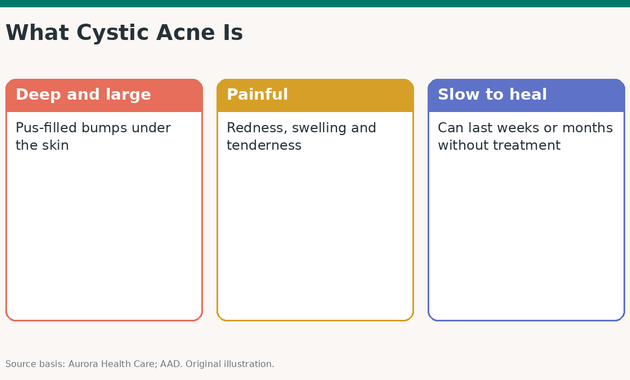
The American Academy of Dermatology (AAD) explains that nodules and cysts develop deep under the skin, unlike whiteheads and blackheads. You may not even see a deep pimple, yet you can still feel the painful lump. Therefore, many people mistake it for a bruise or a boil at first.
Sources: AAD – Treating deep, painful pimples
What Cystic Acne Looks and Feels Like
Common symptoms include large pus-filled bumps, redness and swelling, and pain or tenderness when touched. Dermatology sources also note that these lumps often appear on the face, jawline, neck, back and chest. Because they sit deep, they rarely form a visible white tip.
Sources: Aurora Health Care – Cystic acne; SingleCare – Cystic acne treatment; Ubie Doctor’s Note – Cystic acne
Cystic acne is closely related to nodular acne. Cleveland Clinic explains that cysts are softer, while nodules are firm, very painful lumps that feel like knots under the skin. Some people have both. In either case, the condition needs treatment from a dermatologist.
Sources: Cleveland Clinic – Nodular acne
What Causes Cystic Acne?
The basic process is familiar. Oil, dead skin cells and bacteria build up inside a clogged pore, and the inflammation extends deep into the skin. Doctors also point to hormones, genetics and delayed treatment as common drivers of this deep inflammation.
Sources: Ubie Doctor’s Note – Cystic acne
Other risk factors exist as well. Aurora Health Care lists a family history of severe acne, oily makeup or skincare products and certain medications. Moreover, hormonal fluctuations, especially in women, can trigger deep breakouts along the jawline or chin.
Sources: Aurora Health Care – Cystic acne; SLMD Skincare – Nodular acne
Why You Should Never Pop Cystic Acne
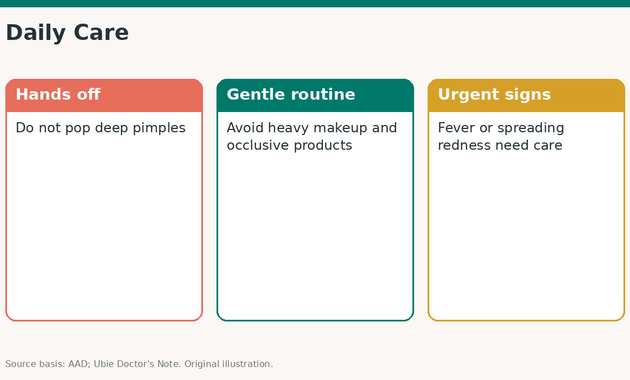
The AAD’s first tip for a deep, painful pimple is simple: keep your hands off and do not try to pop it. A dermatologist known online as Dr. Pimple Popper adds that nodules are solid and deep, contain no pus to release, and that pressing or picking can cause permanent damage.
Sources: AAD – Treating deep, painful pimples; SLMD Skincare – Nodular acne
Picking also raises scarring risk. Aurora Health Care notes that delaying treatment or picking at cysts can increase the chance of scars, which may appear as red or dark spots or textured areas. As a result, patience and professional care protect your skin better than squeezing.
Sources: Aurora Health Care – Cystic acne
Cystic Acne and Scarring Risk
Scarring is the biggest long-term worry. Aurora Health Care explains that cystic acne scars can appear as red or dark spots or as textured areas, and that some people are more likely to scar than others. Doctors also warn that untreated cysts can leave dark spots, known as post-inflammatory hyperpigmentation.
Sources: Aurora Health Care – Cystic acne; Ubie Doctor’s Note – Cystic acne
Prevention starts with early treatment. The AAD notes that preventing acne also prevents scars, and that picking and squeezing raise the chance of scarring. Therefore, the weeks after the first deep lump appears are the best time to involve a dermatologist.
Sources: AAD – Acne scars
Can Cystic Acne Go Away on Its Own?
An individual cyst may eventually fade without treatment. However, untreated nodules often persist for weeks or even months, which raises the risk of scarring. Aurora Health Care likewise says these lesions can last weeks or months without treatment. As a result, waiting rarely helps.
Sources: SLMD Skincare – Nodular acne; Aurora Health Care – Cystic acne
Treatment Options for Cystic Acne
Over-the-counter products rarely reach deep lesions. SingleCare states that once blemishes grow into nodules and cysts, it is time to see a dermatologist. Cleveland Clinic similarly says nodular acne requires treatment from a dermatologist, because untreated nodules can lead to permanent and severe scarring.
Sources: SingleCare – Cystic acne treatment; Cleveland Clinic – Nodular acne
Cortisone injections are a common in-office option. A dermatologist uses a fine needle to inject a steroid into a very large, painful or lingering nodule. Sources report that swelling and pain often improve within about 24 to 48 hours, which can also lower scarring risk.
Sources: Cleveland Clinic – Nodular acne; Ubie Doctor’s Note – Cystic acne; SLMD Skincare – Nodular acne
Surgical drainage or excision is used sparingly. Many dermatologists reserve it for painful nodules or cysts because of scarring concerns. Furthermore, the AAD guidelines include topical combinations, hormonal therapy and isotretinoin for severe or treatment-resistant acne, all under medical supervision.
Sources: SingleCare – Cystic acne treatment; AAD guideline update; Dermatology Times

Cystic Acne and Your Daily Routine
A gentle routine supports medical treatment. Dermatologists advise avoiding heavy makeup or occlusive products, moisturizing even oily skin, and choosing consistency over aggressiveness. In addition, the AAD recommends washing gently up to twice daily and choosing non-comedogenic products.
Sources: Ubie Doctor’s Note – Cystic acne; AAD – Tips for managing acne
Sun protection matters too. Some acne medicines make skin more sensitive, so the AAD recommends a broad-spectrum, water-resistant sunscreen with SPF 30 or higher. Meanwhile, protecting healing skin may reduce dark marks after deep lesions settle.
Sources: AAD – Tips for managing acne; Ubie Doctor’s Note – Cystic acne
Cystic Acne and Emotional Health
Severe acne can weigh on mood. DermNet notes that acne can have profound social and psychological effects. Aurora Health Care adds that early treatment can help prevent scars and reduce the emotional stress often linked with severe acne. Therefore, seeking help early is a sound step for both skin and wellbeing.
Sources: DermNet; Aurora Health Care – Cystic acne
Cystic Acne: Quick Answers
How long do nodules last? They can remain under the skin for weeks or months if not treated properly, according to a dermatologist at SLMD Skincare.
Sources: SLMD Skincare – Nodular acne
What is the fastest option? A cortisone shot given by a dermatologist can reduce swelling within 24 to 48 hours, although it does not replace a full treatment plan.
Sources: SLMD Skincare – Nodular acne; Ubie Doctor’s Note – Cystic acne
Is cystic acne hormonal? Often, yes. Hormonal fluctuations, especially in women, can trigger deep breakouts along the jawline or chin, so hormonal treatment may be discussed.
Sources: SLMD Skincare – Nodular acne; AAD guideline update
- Do not pop or pick deep pimples.
- See a dermatologist early to limit scarring.
- Expect treatment to take time and to need adjusting.
- Seek urgent care for fever, severe swelling or spreading redness.
Sources: AAD – Treating deep, painful pimples; Aurora Health Care – Cystic acne; Ubie Doctor’s Note – Cystic acne
When to See a Dermatologist
Book a visit if you have a deep, painful pimple that does not go away, or if you develop several. The AAD advises partnering with a board-certified dermatologist in those cases. Mayo Clinic gives the same advice when self-care does not clear acne.
Sources: AAD – Treating deep, painful pimples; Mayo Clinic
Seek medical care promptly if you notice severe swelling, spreading redness, fever or other signs of infection. Improvement may take time, and plans often need adjusting. Even so, effective care exists, and consistent follow-up gives you the best chance of fewer scars.
Sources: Ubie Doctor’s Note – Cystic acne; Aurora Health Care – Cystic acne
In summary, cystic acne is deep, painful and scar-prone, but it is treatable. Avoid popping, keep your routine gentle and involve a dermatologist early.
Sources: AAD – Treating deep, painful pimples; Aurora Health Care – Cystic acne
Related reading: Types of Acne · Acne Treatment Options
Medical note: Educational content only, not medical advice. Consult a licensed healthcare professional.