
Benzoyl Peroxide for Acne: What Dermatologists Want You to Know
Benzoyl peroxide for acne is one of the most familiar over-the-counter options on pharmacy shelves. You will find it in washes, gels, creams and spot treatments. Dermatology Times quotes an AAD expert who describes it as an excellent treatment that helps dry up lesions.
Sources: Dermatology Times
Still, many people use it without knowing how it works or how to avoid irritation. This guide explains the basics, the evidence on strength, practical tips and common side effects, using published dermatology sources.
Sources: Acne.org – Benzoyl peroxide overview
How Benzoyl Peroxide for Acne Works
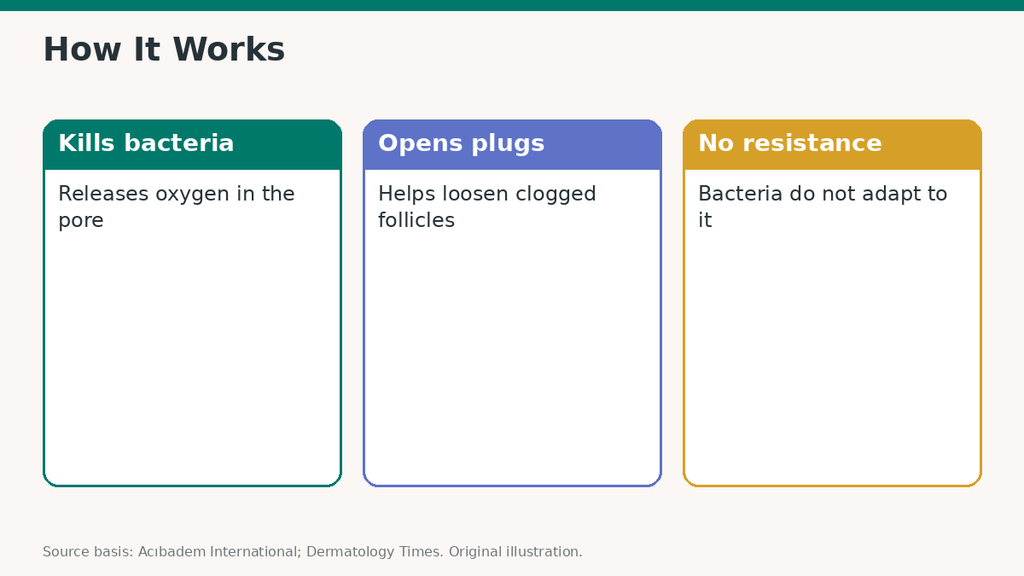
Benzoyl peroxide releases oxygen into the pore. That oxygen-rich environment kills acne bacteria and helps loosen the plugs that form blackheads and pimples. Importantly, the bacteria do not develop resistance to it, which is one reason guidelines value it.
Sources: Acıbadem International – Benzoyl peroxide
Because it reduces bacteria, benzoyl peroxide may also lower inflammation inside lesions. However, it does not regulate oil production or hormones. Consequently, it is rarely a stand-alone answer for deep, cystic or hormone-driven acne, and those cases need medical advice.
Sources: Acne.org – Benzoyl peroxide overview; Acıbadem International – Benzoyl peroxide
Where It Works Best
Dermatology groups suggest benzoyl peroxide as a spot treatment for clusters of whiteheads. It is also commonly used for pimples and blemishes, sometimes across the whole affected area. Likewise, University of Miami dermatologists recommend a benzoyl peroxide body wash for acne on the back and body.
Sources: Forefront Dermatology; University of Miami Health System
For milder acne, a review summarized by Acne.org concluded that benzoyl peroxide appears effective and works about as well as the topical retinoid adapalene or the topical antibiotic clindamycin. In contrast, deep, painful lumps need a dermatologist rather than a stronger over-the-counter product.
Sources: Acne.org – Benzoyl peroxide overview; Forefront Dermatology
Choosing a Strength
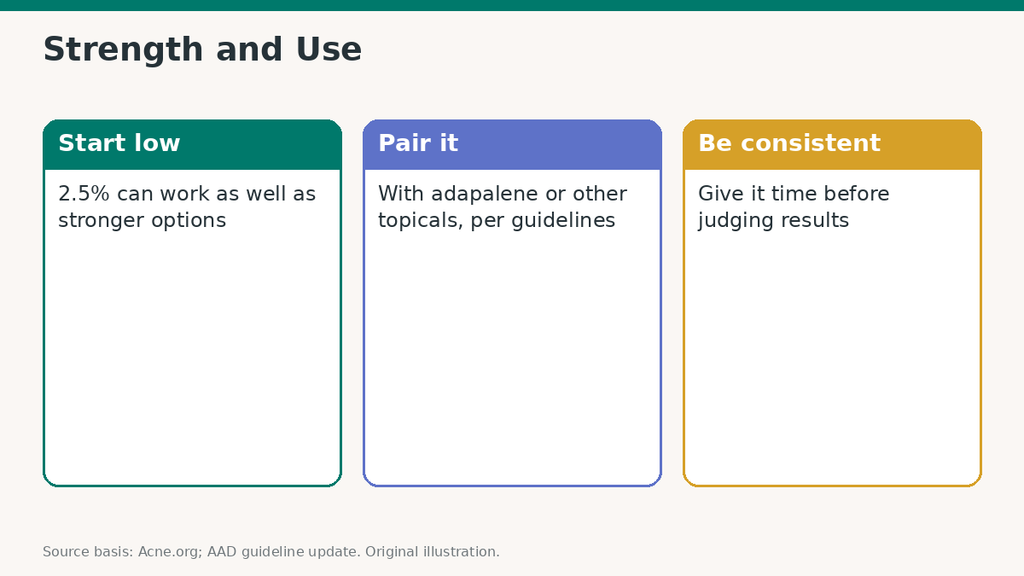
A higher percentage is not automatically better. A 1986 study compared 2.5%, 5% and 10% products in 153 people with mild-to-moderate facial acne over eight weeks. The 5% product cut inflammatory lesions by about 58%, the 2.5% product by about 51% and the 10% product by about 45%. Burning, redness and peeling were worse with 10%.
Sources: Acne.org – Benzoyl peroxide overview
Therefore, when choosing benzoyl peroxide for acne, many sources describe concentration as a tolerability dial more than an efficacy dial. Starting with a lower strength is a sensible approach, especially if your skin is easily irritated. You can discuss stronger options with a dermatologist if progress stalls.
Sources: Acıbadem International – Benzoyl peroxide; Acne.org – Benzoyl peroxide overview
Benzoyl Peroxide vs. Salicylic Acid
Salicylic acid is the other ingredient people often compare it with. Dermatology sources list both for pimples and blemishes, and dermatologists call benzoyl peroxide and salicylic acid the two star ingredients for treating back acne at home. Because they act in different ways, some products combine them, but combinations can also irritate more.
Sources: Forefront Dermatology; TODAY – Dermatologists on bacne
One medical comparison describes benzoyl peroxide as suited to mild-to-moderate inflammatory acne, supported by multiple randomized trials and considered a guideline first-line option. The choice between the two therefore depends on the lesion type, your skin tolerance and professional advice.
Sources: Acıbadem International – Benzoyl peroxide
Combining Benzoyl Peroxide With Other Treatments
Benzoyl peroxide for acne
The AAD guidelines recommend combining different types of topical medicine, and the pairing of benzoyl peroxide with a topical retinoid appears again and again. Adapalene is the retinoid that stays chemically stable alongside it. In addition, guidelines state that topical antibiotics should not be used for acne without benzoyl peroxide.
Sources: AAD guideline update; Acıbadem International – Benzoyl peroxide
Combinations can be more effective, but they can also irritate more. Therefore, introduce products gradually and ask a professional before layering several actives. The AAD warns that trying new acne treatments too often can irritate skin and cause breakouts.
Sources: AAD – 10 habits that worsen acne; AAD – Tips for managing acne
How to Use It Safely
When you use benzoyl peroxide for acne, begin with a small area or a low frequency. The AAD recommends gentle, alcohol-free products and moisturizing after washing to help the skin cope. Moreover, apply sunscreen daily: the AAD recommends a broad-spectrum, water-resistant product with SPF 30 or higher.
Sources: AAD – Tips for managing acne; AAD – 10 habits that worsen acne
With washes, follow the label. A medicated body wash can be applied to the affected area, left on briefly and rinsed off thoroughly. For stubborn skin on the chest or back, a dermatologist may suggest adding another topical such as salicylic acid or adapalene.
Sources: AOL / Hearst – chest acne tips; University of Miami Health System
Common Side Effects and How to Handle Them
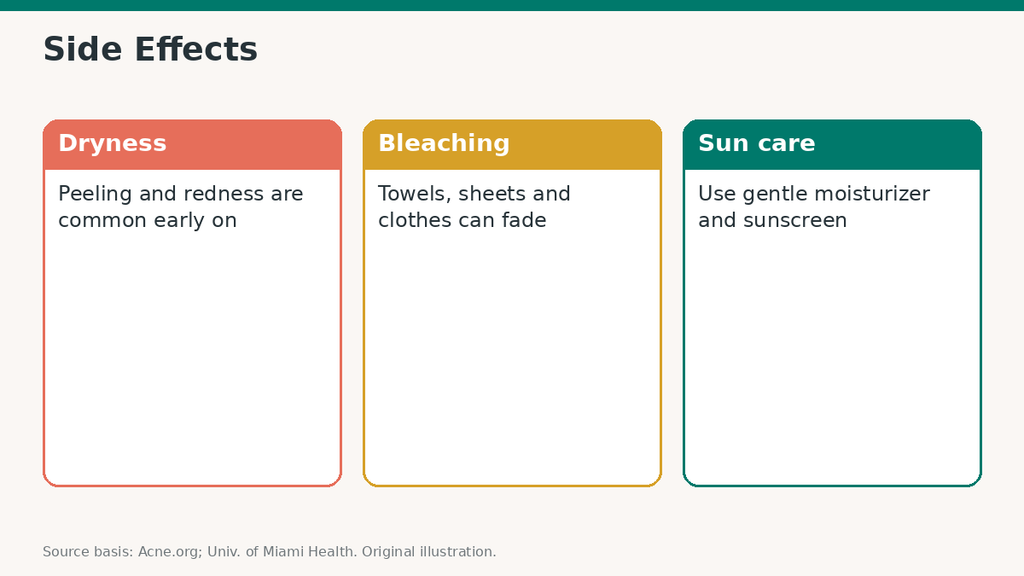
Dryness, redness, burning and peeling are the most common side effects, and they tend to appear early. Using a gentle moisturizer and starting with a lower strength can reduce them. If irritation becomes severe, stop using the product and ask a doctor or pharmacist.
Sources: Acne.org – Benzoyl peroxide overview; Acıbadem International – Benzoyl peroxide
Benzoyl peroxide is also a bleaching agent. It can bleach towels and clothing. Consequently, use white linens, wear light-colored shirts and let the product dry before dressing.
Sources: University of Miami Health System; AOL / Hearst – chest acne tips; Acne.org – Benzoyl peroxide overview
What About Other Popular Ingredients?
Not every popular ingredient has strong evidence. Dermatology Times reports that the AAD guidelines found limited evidence for sulfur, nicotinamide, resorcinol, sodium sulfacetamide, aluminum chloride and zinc in acne treatment. As a result, it is wise to prioritize well-studied options and to check with a professional before relying on trends.
Sources: Dermatology Times
Frequently Asked Questions
Does benzoyl peroxide work overnight? No. A dermatologist speaking at an AAD meeting stressed that none of the therapies used to treat acne work overnight, so give a routine time before judging it.
Sources: Dr. Bethanee Schlosser, AAD meeting report
Can it treat deep, cystic acne alone? Rarely. Because it does not regulate oil or hormones, deep or hormone-driven acne usually needs medical care.
Sources: Acıbadem International – Benzoyl peroxide
Will it stain my clothes? Yes, it can. Dermatologists advise light-colored clothing and white towels after using it.
Sources: University of Miami Health System; AOL / Hearst – chest acne tips
Can I use it with a retinoid? Guidelines often pair the two, and adapalene stays chemically stable alongside benzoyl peroxide. Start slowly, however, because the combination can irritate.
Sources: Acıbadem International – Benzoyl peroxide; AAD guideline update
Keeping Expectations Realistic
Benzoyl peroxide for acne is a tool, not a miracle. Using too many products at once can irritate skin and cause breakouts, according to the AAD. Therefore, add one change at a time, track how your skin responds and give each step a fair trial before deciding it has failed.
Sources: AAD – 10 habits that worsen acne; Dr. Bethanee Schlosser, AAD meeting report
When to See a Dermatologist
If breakouts continue after consistent use, see a dermatologist. The AAD recommends partnering with a board-certified dermatologist when acne persists, and Mayo Clinic gives the same advice when self-care does not clear acne. For severe or treatment-resistant cases, the guidelines point to stronger options such as isotretinoin under supervision.
Sources: AAD – Tips for managing acne; Mayo Clinic; AAD guideline update
In summary, benzoyl peroxide for acne is accessible, well studied and effective for many mild cases. Choose a gentle strength, add it to a routine gradually, protect your skin from the sun and be patient. Then let a dermatologist guide you if results fall short.
Sources: Dermatology Times; Acıbadem International – Benzoyl peroxide
Related reading: Types of Acne · Acne Treatment Options
Medical note: Educational content only, not medical advice. Consult a licensed healthcare professional.