
Salicylic acid for acne is one of the most familiar ingredients in cleansers, toners and spot treatments. Medical News Today describes it as a common ingredient that helps unblock clogged pores and exfoliate the skin. Healthline calls it a beta hydroxy acid known for reducing acne by exfoliating and keeping pores clear.
Sources: Medical News Today – Salicylic acid for acne; Healthline – Salicylic acid for acne

Beyond unclogging pores, salicylic acid also increases skin cell turnover. A dermatologist in Marie Claire notes that this can give a brighter, smoother complexion. Moreover, regular use may help prevent new clogged pores, which is why many routines include it.
Sources: Marie Claire – What salicylic acid does
How Salicylic Acid for Acne Works
Acne begins when excess oil and dead skin cells block pores. Salicylic acid targets that blockage. Dermatologists explain that it is oil-soluble, so it can penetrate into oily pores and exfoliate from the inside. Alpha hydroxy acids, by comparison, are water-soluble, so salicylic acid can work deeper in the pore.
Sources: Medical News Today – Salicylic acid for acne; Glamour – What salicylic acid does to your skin
In addition, one dermatologist notes that salicylic acid helps by dissolving the type of skin debris that clogs pores. Medical News Today also lists anti-inflammatory and antibacterial properties. Consequently, the ingredient addresses more than one step in how a pimple forms.
Sources: Glamour – What salicylic acid does to your skin; Medical News Today – Salicylic acid for acne
Which Acne Types Respond Best
Salicylic acid performs best on comedonal acne, meaning blackheads and whiteheads. Because the blemishes come from clogged pores and slow skin turnover, an oil-soluble exfoliant fits well. Healthline similarly says it works best for mild acne.
Sources: Marie Claire – What salicylic acid does; Healthline – Salicylic acid for acne; Glamour – What salicylic acid does to your skin
It is not a cure-all. For deep, painful acne, dermatology groups recommend professional care. Likewise, a dermatologist writing for SLMD Skincare suggests talking to a doctor if there is no improvement after 6 to 8 weeks of consistent use.
Sources: Forefront Dermatology; SLMD Skincare – Is salicylic acid enough?
However, a number on the label is not the whole story. Healthline reminds readers that a doctor or dermatologist can recommend the form and strength that suit your skin type and current condition. Furthermore, although there is no complete cure for acne, salicylic acid has helped many people clear breakouts.
Sources: Healthline – Salicylic acid for acne
Therefore, track how your skin responds. If dryness or stinging appears, reduce how often you use it. Likewise, check with a dermatologist if you do not see results after consistent use.
Sources: Healthline – Salicylic acid for acne; SLMD Skincare – Is salicylic acid enough?; Glamour – What salicylic acid does to your skin
Choosing a Strength
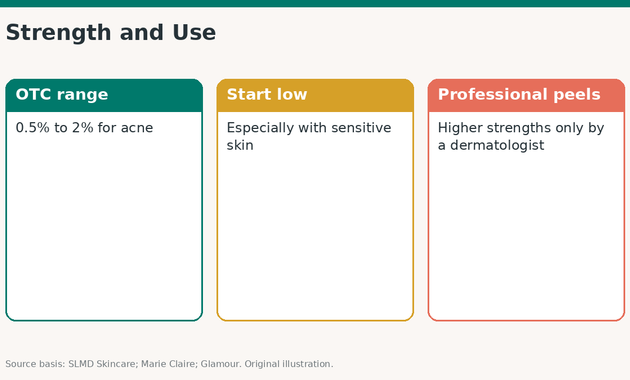
Over-the-counter products are regulated by the FDA, and for acne salicylic acid is approved at concentrations between 0.5% and 2%. A dermatologist cited by SLMD Skincare suggests beginning at a lower strength if you are new to the ingredient or have sensitive skin.
Sources: SLMD Skincare – Is salicylic acid enough?
Higher strengths belong in the clinic. Dermatologists note that chemical peels can use 20% to 30% salicylic acid, and only a trained professional should perform them. Professional peels can address both acne and hyperpigmentation.
Sources: Marie Claire – What salicylic acid does; Glamour – What salicylic acid does to your skin; Medical News Today – Salicylic acid for acne
Products With Salicylic Acid for Acne
Salicylic acid appears in many formats. A dermatologist writing for SLMD Skincare lists cleansers, spot treatments and pimple patches. Cleansers suit daily use, whereas spot treatments target single blemishes. Therefore, you can match the format to your skin type and routine.
Sources: SLMD Skincare – Is salicylic acid enough?
Other acne options exist beyond over-the-counter products. Medical News Today notes that dermatologists may also use extractions to unblock pores and prescription acne medicines when needed. In addition, professional salicylic acid peels are available in clinics.
Sources: Medical News Today – Salicylic acid for acne
How to Use Salicylic Acid for Acne
Choose the format that fits the area. Cleansers, toners, leave-on treatments and pimple patches all exist. For the chest and back, dermatologists describe salicylic acid and benzoyl peroxide as star ingredients for home care.
Sources: SLMD Skincare – Is salicylic acid enough?; TODAY – Dermatologists on bacne
Keep the routine simple. Layering salicylic acid with other acids or retinoids can dry and irritate the skin, so dermatologists suggest a planned approach. Healthline also advises not applying salicylic acid products to large areas of the body. Moreover, the AAD recommends gentle, alcohol-free products and daily sunscreen.
Sources: Marie Claire – What salicylic acid does; Healthline – Salicylic acid for acne; AAD – Tips for managing acne
Salicylic Acid vs. Benzoyl Peroxide
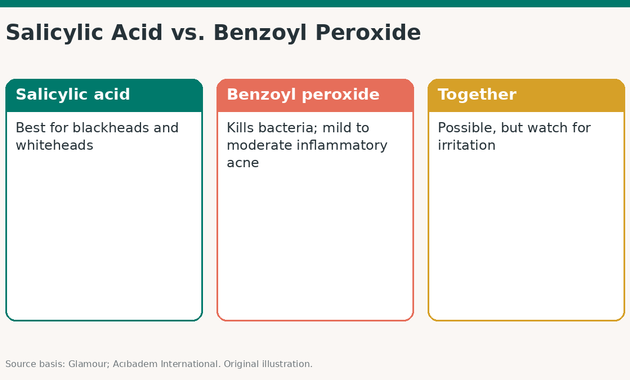
People often wonder which one to pick. Benzoyl peroxide kills acne bacteria and loosens pore plugs, and a medical comparison considers it suited to mild-to-moderate inflammatory acne. Salicylic acid, in contrast, shines on blackheads and whiteheads.
Sources: Acıbadem International – Benzoyl peroxide; Glamour – What salicylic acid does to your skin
Some routines use both. However, combining actives can raise irritation, so introduce them gradually. If breakouts include red, swollen pimples as well as clogged pores, a dermatologist can tailor the combination.
Sources: Forefront Dermatology; Marie Claire – What salicylic acid does
Common Mistakes With Salicylic Acid for Acne
- Overusing the product in hope of faster results.
- Layering several acids or retinoids at once.
- Skipping sunscreen and moisturizer.
- Picking at blemishes while treating them.
- Judging results after only a few days.
Sources: Glamour – What salicylic acid does to your skin; Marie Claire – What salicylic acid does; AAD – Tips for managing acne; Dr. Bethanee Schlosser, AAD meeting report
Each mistake has the same root: too much, too soon. A dermatologist in Glamour says the main negative effect is irritation and dryness in sensitive skin or with overuse. Likewise, an AAD expert reminded colleagues that acne therapies do not work overnight.
Sources: Glamour – What salicylic acid does to your skin; Dr. Bethanee Schlosser, AAD meeting report
Side Effects and Precautions
Most side effects are mild. Medical News Today lists skin irritation and peeling, and it advises anyone with more severe reactions to stop the product and contact a doctor. A dermatologist in Glamour adds that the main downside is irritation and dryness in very sensitive skin or in people who overuse it.
Sources: Medical News Today – Salicylic acid for acne; Glamour – What salicylic acid does to your skin
Special groups should check first. Healthline recommends speaking with a doctor before a child starts using salicylic acid products, and before using them while pregnant or nursing. Certain medicines may also interact with it.
Sources: Healthline – Salicylic acid for acne
Salicylic Acid for Acne: Quick Answers
Can it treat cystic acne? Not alone. Deep, painful lesions need professional care, and dermatology groups recommend seeing a dermatologist for them.
Sources: Forefront Dermatology; SLMD Skincare – Is salicylic acid enough?
How long should I try it? One dermatologist suggests that if you see no improvement after 6 to 8 weeks of consistent use, you should talk to a professional.
Sources: SLMD Skincare – Is salicylic acid enough?
Can it help with dark marks? Professional peels can address both acne and hyperpigmentation, according to a dermatologist in Marie Claire. Home products, in contrast, work more modestly.
Sources: Marie Claire – What salicylic acid does
When to See a Dermatologist
If you have used salicylic acid for acne consistently and nothing improves, see a dermatologist. They can confirm the acne type, rule out look-alike conditions and add prescription options such as retinoids when appropriate.
Sources: SLMD Skincare – Is salicylic acid enough?; AAD – Tips for managing acne; Forefront Dermatology
In summary, salicylic acid for acne is a gentle, accessible choice for clogged pores. Start low, be consistent, protect your skin from the sun and seek help when breakouts are deep, painful or persistent.
Sources: Medical News Today – Salicylic acid for acne; Marie Claire – What salicylic acid does
Related reading: Types of Acne · Acne Treatment Options
Medical note: Educational content only, not medical advice. Consult a licensed healthcare professional.