
Isotretinoin for Acne: What Patients Should Know
Isotretinoin for acne is a powerful oral prescription medicine, not an everyday skincare step. StatPearls explains that it affects the sebaceous glands and that the FDA approved it in 1982 for severe, resistant nodular acne that did not respond to conventional therapy, including systemic antibiotics.
Sources: StatPearls – Isotretinoin (NCBI)

Because of its strength, isotretinoin is reserved for specific situations and always requires a specialist. This article summarizes published information. It does not replace a consultation, and it deliberately avoids dosing advice.
Sources: StatPearls – Isotretinoin (NCBI)
Isotretinoin is a form of vitamin A, and it is available only from a certified pharmacy through iPLEDGE. Moreover, prescribing information notes that the dose may be adjusted according to response and side effects, some of which are dose related. Therefore, treatment is tailored and supervised from start to finish.
Sources: Drugs.com – Isotretinoin; RxList – Sotret (isotretinoin)
Who Is Isotretinoin for Acne Meant For?
Clinical resources describe approval for severe nodular or inflammatory acne, acne conglobata and recalcitrant acne. The AAD guidelines likewise recommend isotretinoin for severe acne or for people who failed standard topical or oral therapy.
Sources: GoodRx Health – Accutane monitoring tips; AAD guideline update
Dermatology Times adds that isotretinoin may be considered in severe nodular acne and in cases that cause scarring or psychosocial distress. It also stresses that the drug is powerful and has a history of side effects, so appropriate precautions apply.
Sources: Dermatology Times
Why Pregnancy Prevention Comes First
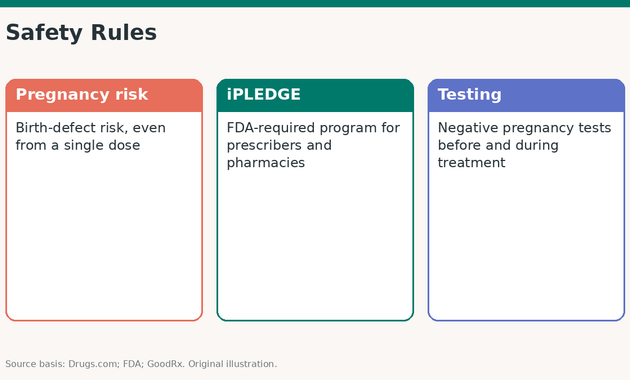
The most serious risk is harm to an unborn baby. Drugs.com states that even a single dose can cause severe birth defects, miscarriage, premature birth or death of a baby. Pregnancy is therefore a contraindication, and patients must have a negative pregnancy test before treatment.
Sources: Drugs.com – Isotretinoin; GoodRx Health – Accutane monitoring tips
To manage this risk, the FDA requires a safety program called iPLEDGE. It is a centralized registry in which prescribers and pharmacies are specially certified, and isotretinoin is dispensed only through certified pharmacies. Moreover, the program requires two negative pregnancy tests 30 days apart before starting, followed by monthly testing during treatment.
Sources: FDA – iPLEDGE REMS document; GoodRx Health – Accutane monitoring tips; Drugs.com – Isotretinoin
What Isotretinoin for Acne Treatment Involves
Treatment starts with a detailed conversation. Clinical guidance recommends reviewing acne severity, duration, previous treatments and their results, and family history. Counseling then covers iPLEDGE rules, pregnancy testing and what side effects to expect.
Sources: RxDx – Severe acne and isotretinoin counseling
Afterwards, patients return regularly. In addition to the monthly pregnancy test, visits allow the doctor to check progress, side effects and laboratory results. As a result, isotretinoin care is closer to a supervised program than to a simple prescription.
Sources: GoodRx Health – Accutane monitoring tips; RxDx – Severe acne and isotretinoin counseling
The drug is also meant for the right patients. Prescribing information says it should be reserved for severe nodular acne that is unresponsive to conventional therapy, including systemic antibiotics, because of its significant adverse effects.
Sources: RxList – Sotret (isotretinoin)
Common Side Effects
Most side effects are manageable. Common ones include dry lips, dry skin, dry eyes, nosebleeds, dry nasal passages, fatigue, headache and muscle or joint pain. Laboratory changes such as raised triglycerides and liver enzymes can also occur. Setting expectations early helps, and clinical guidance notes that most side effects resolve with time after the medicine is stopped.
Sources: RxDx – Severe acne and isotretinoin counseling; GoodRx Health – Accutane monitoring tips; StatPearls – Isotretinoin (NCBI)
Sun sensitivity can also appear. Drug information lists quick or severe sunburn among the effects that patients should report. Consequently, sunscreen and shade remain important, as the AAD advises for anyone using acne medicines that make skin more sensitive.
Sources: RxList – Sotret (isotretinoin); AAD – Tips for managing acne
Because of these risks, isotretinoin is not a casual option for mild breakouts. Prescribing information reserves it for severe nodular acne unresponsive to conventional therapy. Nevertheless, in the right patient the benefits can outweigh the risks, which is why the FDA built the iPLEDGE program around safe use.
Sources: RxList – Sotret (isotretinoin); FDA – iPLEDGE REMS document
Serious Risks to Discuss With Your Doctor
Less common but serious problems exist. Educational material on isotretinoin lists worsening inflammatory bowel disease, raised pressure around the brain, vision changes, hearing impairment, severe allergic reactions and depression among the serious effects. Doctors therefore explain these risks in detail before treatment begins.
Sources: RxDx – Severe acne and isotretinoin counseling
Mood deserves particular attention. Media reports have linked isotretinoin with depression and suicide, yet a study discussed on Dermcast found no causal link with psychiatric risk. It did conclude that patients on the drug appear vulnerable to psychiatric concerns, and that monthly iPLEDGE visits could help screen for problems. If your mood changes, tell your doctor promptly.
Sources: Dermcast – iPLEDGE and psychiatric screening
Monitoring During Treatment
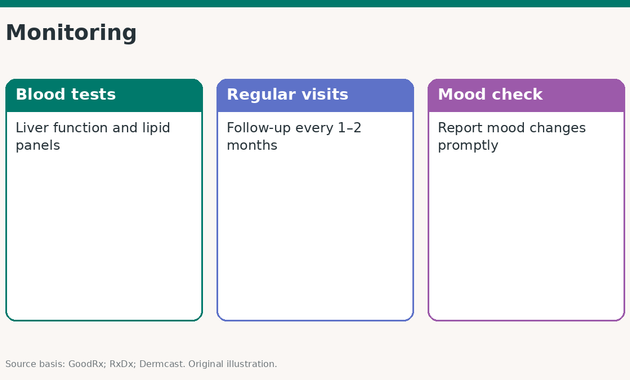
Monitoring is part of the treatment, not an optional extra. Clinical guidance recommends baseline and ongoing pregnancy testing, liver function tests and lipid panels. StatPearls adds that frequent laboratory monitoring is indicated during the induction period and throughout therapy.
Sources: GoodRx Health – Accutane monitoring tips; StatPearls – Isotretinoin (NCBI)
Regular follow-up also matters. One medical education resource recommends visits every one to two months to review effectiveness, side effects and laboratory values. In addition, patient education helps people recognize which symptoms need a call to the clinic.
Sources: RxDx – Severe acne and isotretinoin counseling
If Pregnancy Occurs During Treatment
Patients who become pregnant while taking isotretinoin must act at once. Drug information tells them to call their doctor and report the pregnancy to the iPLEDGE pregnancy registry. The FDA documents that the registry collects data on pregnancies among enrolled patients and that treatment stops on suspicion or detection of pregnancy.
Sources: Drugs.com – Isotretinoin; FDA – iPLEDGE REMS document
Questions to Ask Your Dermatologist
- Is my acne severe or resistant enough for isotretinoin?
- How does the iPLEDGE program work for me?
- Which laboratory tests will I need, and how often?
- Which side effects should prompt an urgent call?
- How will my mood be checked during treatment?
Sources: StatPearls – Isotretinoin (NCBI); FDA – iPLEDGE REMS document; GoodRx Health – Accutane monitoring tips; Dermcast – iPLEDGE and psychiatric screening
Finally, remember the potential upside. The AAD notes that clearing acne can relieve depression and anxiety, and that severe acne can leave permanent scars. For many patients with severe disease, specialist treatment is therefore worth the effort.
Sources: AAD – 5 ways to help your teenager survive acne; AAD – Acne scars
Is Isotretinoin for Acne Right for You?
Only a dermatologist can decide. Usually, doctors try other options first, such as topical combinations, antibiotics and hormonal therapy where suitable. Isotretinoin enters the conversation when acne is severe, scarring or resistant. Furthermore, the decision considers your health history, pregnancy potential and willingness to complete the required monitoring.
Sources: AAD guideline update; StatPearls – Isotretinoin (NCBI); GoodRx Health – Accutane monitoring tips
If you are curious about isotretinoin, book a visit with a board-certified dermatologist. Bring a list of past treatments and questions about side effects, mood and monitoring. Never use someone else’s supply, because the safety steps exist for good reasons.
Sources: AAD – Tips for managing acne; Drugs.com – Isotretinoin
In summary, isotretinoin for acne can transform severe disease, but it demands respect. Strict pregnancy prevention, laboratory monitoring and open communication with your doctor are essential parts of safe care.
Sources: StatPearls – Isotretinoin (NCBI); FDA – iPLEDGE REMS document
Related reading: Types of Acne · Acne Treatment Options
Medical note: Educational content only, not medical advice. Consult a licensed healthcare professional.