
Stress and Acne: What the Evidence Really Shows
Stress and acne seem to arrive together. A big exam, a deadline or a family crisis often comes with a breakout. However, the relationship is more nuanced than “stress causes pimples.” Mayo Clinic explains that stress does not cause acne, although it may make existing acne worse.
Sources: Mayo Clinic
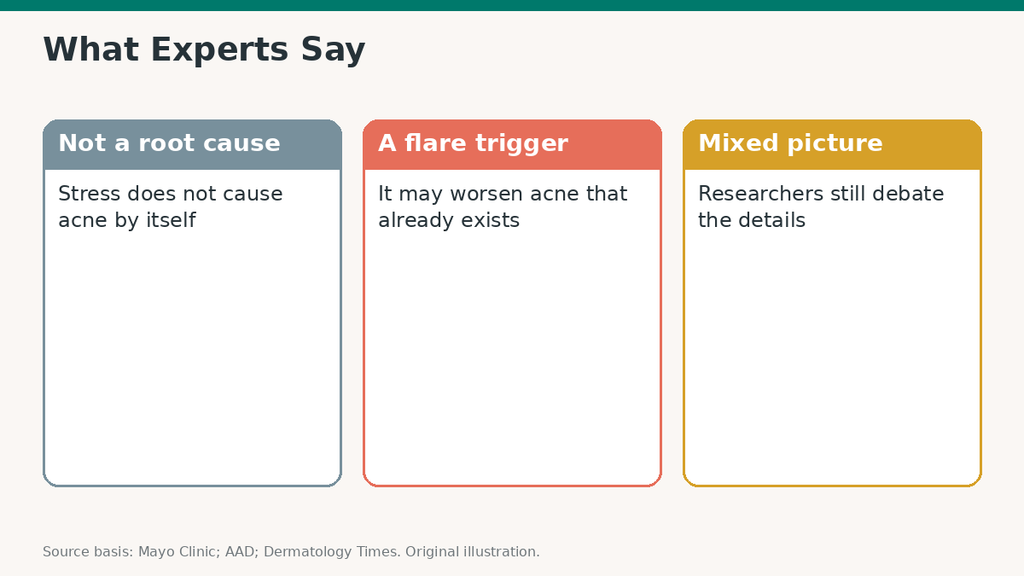
The American Academy of Dermatology (AAD) takes a similar view. It lists stress among the factors that can contribute to adult acne, noting that researchers have found a relationship between stress and flare-ups. In other words, stress works as a trigger, not as the root cause.
Sources: AAD – Adult acne
What Research Says About Stress and Acne
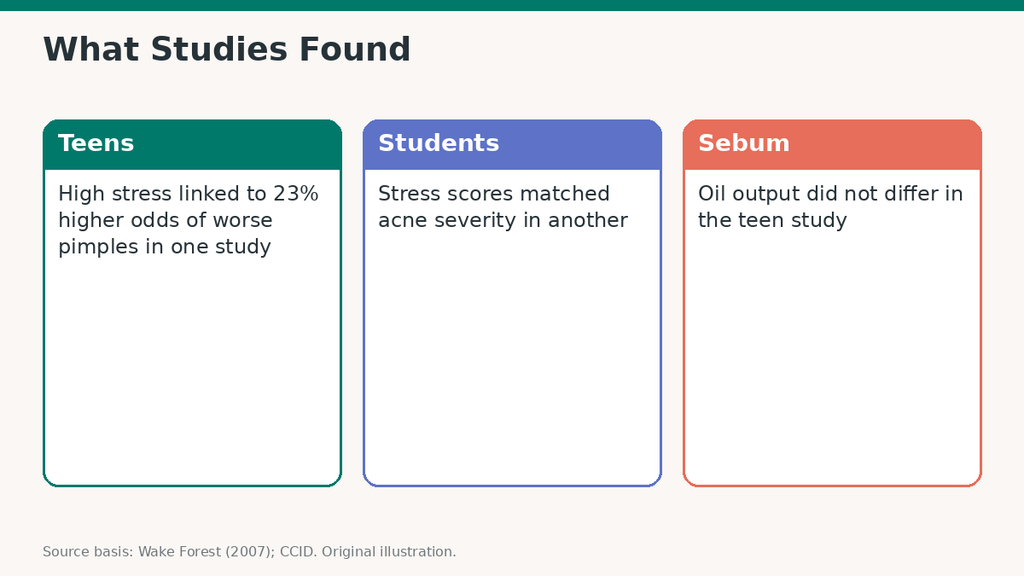
One of the best-known studies looked at secondary school students in Singapore, with an average age of about 15. Researchers from Wake Forest School of Medicine found that teens reporting high stress were 23% more likely to have increased severity of papulopustular acne, the type with red bumps and pimples. Stress levels were not linked to the severity of whiteheads and blackheads.
Sources: Wake Forest School of Medicine (2007)
An earlier Stanford study, published in 2003, found that college students had more acne flare-ups during exams than in calmer periods. Likewise, a study of female medical students found that higher scores on a perceived stress scale went together with higher acne severity. The authors concluded that stress positively correlates with acne severity.
Sources: WebMD – Stress and acne; Clinical, Cosmetic and Investigational Dermatology
Still, the evidence is not unanimous. Dermatology Times reports that some studies debate the correlation and suggest that stress tolerance and coping skills, rather than stressful events themselves, may have the greater impact on acne severity. Therefore, two people facing the same pressure can react differently.
Sources: Dermatology Times – Can stress cause acne?
How Might Stress Worsen Acne?
Scientists do not know exactly how stress worsens acne. They do know that sebum-producing cells carry receptors for stress hormones. Sebum is the oily substance that mixes with dead skin cells and bacteria to clog hair follicles and form pimples or cysts.
Sources: WebMD – Stress and acne
Interestingly, the Wake Forest researchers expected stress to raise sebum production. Yet sebum output did not differ significantly between high-stress and low-stress periods. As a result, the team suggested that stress-related acne may involve factors other than the amount of oil on the skin.
Sources: Wake Forest School of Medicine (2007); Canadian Institute of Stress
Stress and Acne in Adult Women
Stress is a commonly reported trigger in adult female acne. According to a summary in Dermatology Times, 83.2% of adult women with acne reported moderate stress and 15.5% reported high stress, while about 23% blamed job stress for their outbreaks. The same report cites a study attributing roughly half of acne outbreaks in women aged 25 to 40 to stress.
Sources: Dermatology Times – Can stress cause acne?
These figures come from self-reports, so they show association rather than proof of cause. Even so, they match what dermatologists observe: stress, hormones and routine changes often overlap in adult women.
Sources: Dermatology Times – Can stress cause acne?; AAD – Adult acne
The Stress Response and the Skin
Researchers describe a biological pathway. In response to emotional stress, the body’s HPA axis increases the release of cortisol, the main stress hormone. That hormonal change may influence the skin, although scientists still do not know exactly how stress worsens acne.
Sources: Clinical, Cosmetic and Investigational Dermatology; WebMD – Stress and acne
A 2017 study in Clinical, Cosmetic and Investigational Dermatology used the Perceived Stress Scale and the global acne grading system to test the link. It cited earlier work, including a university study of 22 patients and a Singapore cohort of 94 students, that also found significant correlations between stress and acne severity.
Sources: Clinical, Cosmetic and Investigational Dermatology
Why Stress Is Rarely the Only Factor
Acne has several drivers. Mayo Clinic points to excess oil, clogged follicles, bacteria and hormonal activity. Consequently, stress seldom acts alone. It adds fuel to a process that is already under way, which explains why breakouts often follow stressful weeks.
Sources: Mayo Clinic
Hormones deserve a mention. Yale Medicine dermatologists note that stress affects hormone levels, which can make acne and other skin conditions flare. Moreover, Mayo Clinic observes that many women see flares about a week before menstruation. Stress, hormones and routine changes can therefore overlap.
Sources: Yale Medicine; Mayo Clinic
Other triggers also matter. The AAD lists hair and skin care products and some medicines among adult acne triggers. For that reason, it helps to read labels and choose products described as non-comedogenic before blaming stress alone.
Sources: AAD – Adult acne; AAD – 10 habits that worsen acne
A Two-Way Street: Acne Can Increase Stress
The link can run in both directions. WebMD notes that stress and acne can interact in a harmful cycle: stress may worsen breakouts, and visible breakouts can then add to stress. Similarly, DermNet states that acne can have profound social and psychological effects and that even mild acne can be significantly disabling for some people.
Sources: WebMD – Stress and acne; DermNet
This cycle matters most for teenagers and young adults. Therefore, treating acne early is not merely cosmetic. It can also protect mood, confidence and daily functioning.
Sources: DermNet
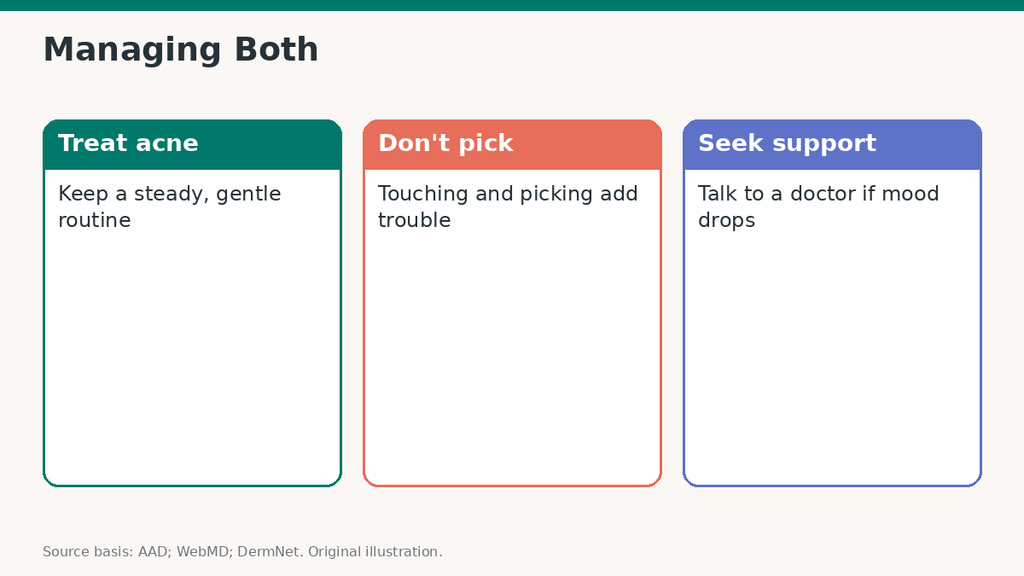
Keep three quick rules in mind when stress is high:
Sources: AAD – Tips for managing acne; AAD – Acne scars
- Stick with the same gentle routine instead of switching products.
- Keep your hands away from blemishes.
- Use sunscreen, because healing skin is more sensitive.
Sources: AAD – Tips for managing acne; AAD – 10 habits that worsen acne; AAD – Acne scars
Practical Ways to Manage Stress and Acne
Start with a steady skin routine. The AAD advises washing gently up to twice a day and after sweating, using gentle, alcohol-free products, and avoiding the temptation to pick or squeeze. Furthermore, the AAD warns that scrubbing hard or switching treatments too often can irritate the skin and trigger breakouts.
Sources: AAD – Tips for managing acne; AAD – 10 habits that worsen acne
Next, avoid touching your face during tense moments. Avoid picking at blemishes, including during tense moments. The AAD notes that picking and squeezing increase the chance of scarring.
Sources: AAD – 10 habits that worsen acne; AAD – Acne scars
Stress management is a sensible addition, although it should not replace treatment. One dermatologist quoted by WebMD says that stress reduction alone cannot really serve as an acne treatment. Even so, researchers behind the Wake Forest study suggested that interventions to reduce stress could help limit acne severity.
Sources: WebMD – Stress and acne; Canadian Institute of Stress
When to Ask for Professional Help
See a dermatologist if acne persists after consistent self-care, leaves scars or dark spots, or feels painful. Mayo Clinic advises seeing a doctor when self-care remedies do not clear acne. Professional treatments can then target the oil, bacteria and inflammation behind it.
Sources: Mayo Clinic; AAD – Tips for managing acne
Pay attention to your emotional health as well. DermNet urges that depression be recognized and managed early, and that anyone who is worried contact a doctor promptly. In short, treat both the skin and the stress, and support yourself on both fronts.
Sources: DermNet
Related reading: Types of Acne · Acne Treatment Options
Medical note: Educational content only, not medical advice. Consult a licensed healthcare professional.