Educational article based on dermatology and medical sources. Not a substitute for professional care.
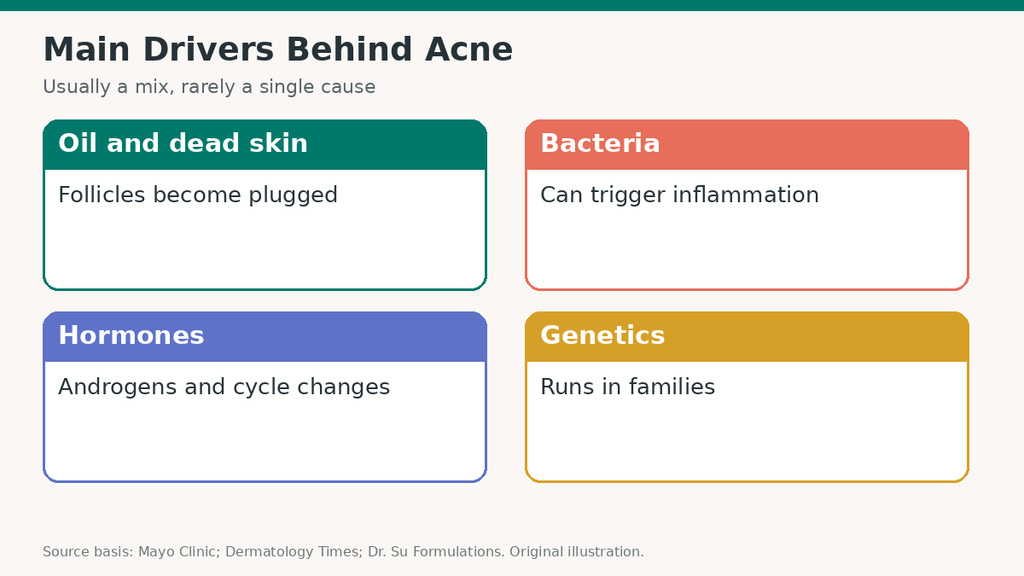
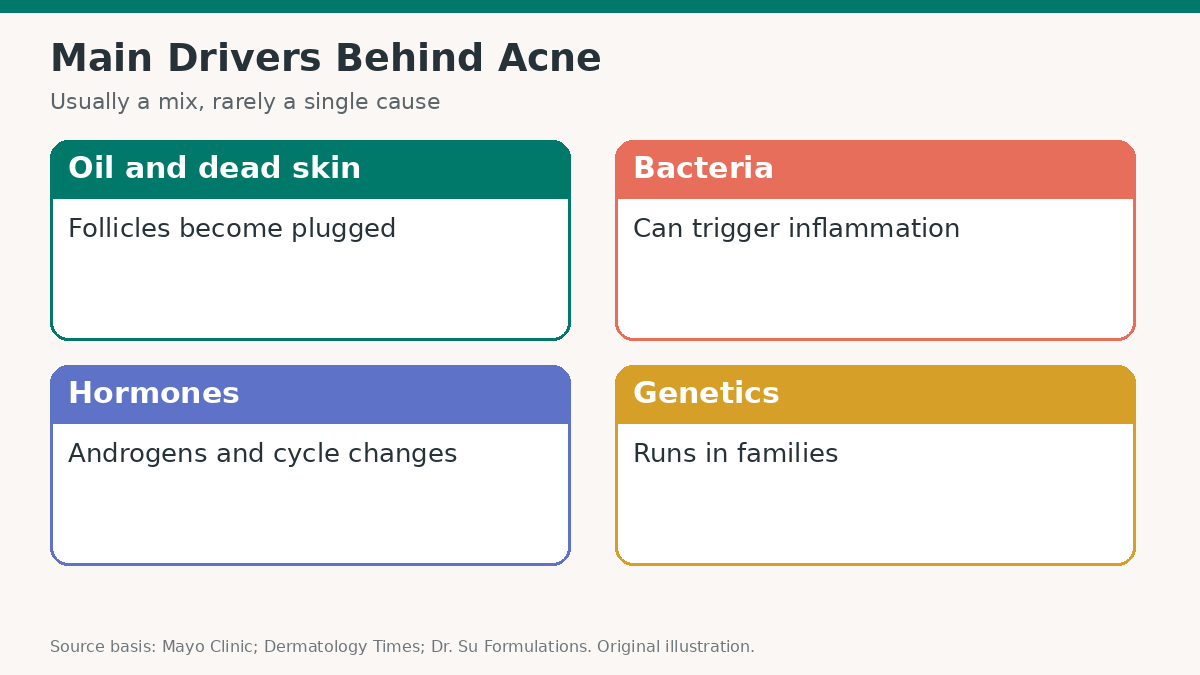
Acne rarely has one cause. Mayo Clinic points to four main factors: excess oil production, follicles clogged by oil and dead skin cells, bacteria, and excess activity of androgen hormones. Dermatology literature describes the same mechanisms using clinical terms, including a hair-follicle blockage disorder, bacterial involvement and inflammation.
Sources: Mayo Clinic; Dermatology Times
Because several factors combine, two people can have very different experiences. One dermatologist-authored guide describes acne as usually a mix of causes and lists genetic predisposition among them, noting that acne tends to run in families. Mayo Clinic says that if both parents had acne, a person is likely to develop it as well.
Sources: Dr. Su Formulations; Mayo Clinic
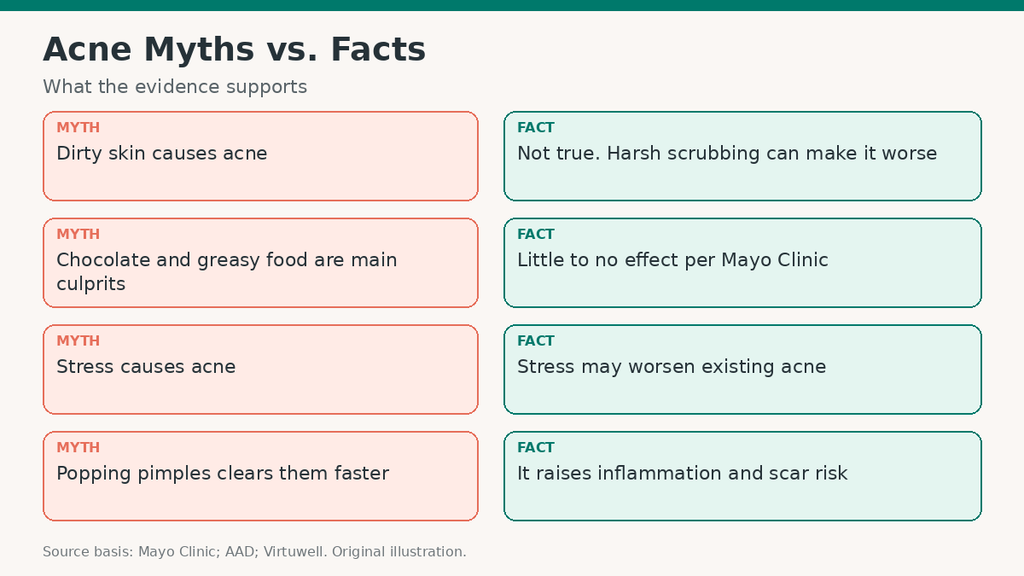
Hormones deserve a closer look. For many women, acne can persist for decades, with flares common about a week before menstruation, and Mayo Clinic adds that this pattern tends to improve in women who use contraceptives. The AAD’s updated guidelines likewise list hormonal options such as combined oral contraceptives, spironolactone and topical clascoterone.
Sources: Mayo Clinic; American Academy of Dermatology
Age matters too, but not always in the way people expect. Teenagers are affected most often, yet adults can struggle as well. Mayo Clinic also cautions that a sudden onset of severe acne in an older adult may signal an underlying condition that needs medical attention.
Source: Mayo Clinic
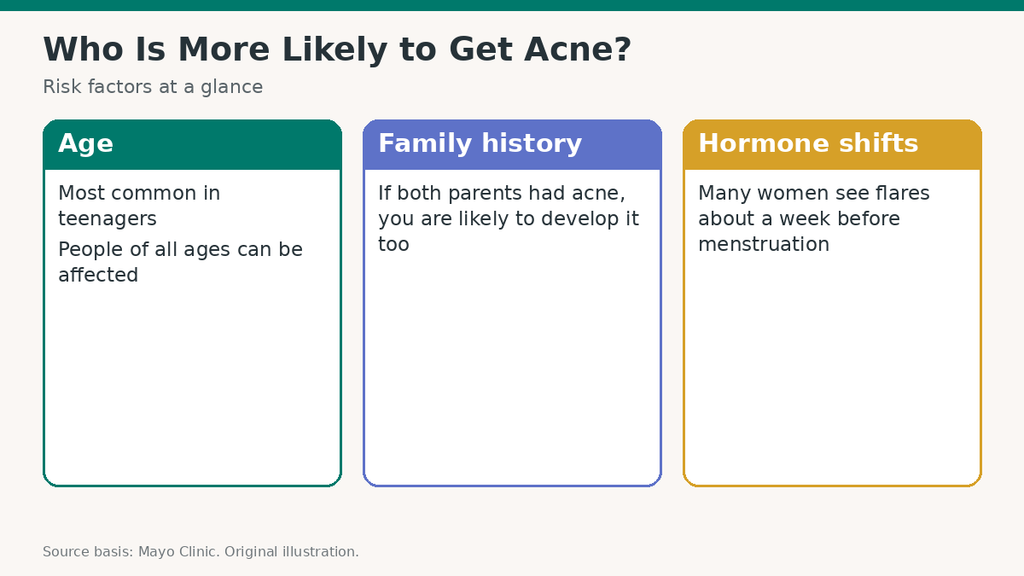
Now the myths. Mayo Clinic states that eating chocolate or greasy food has little to no effect on acne and that acne is not caused by dirty skin. It also says stress does not cause acne, although stress may make existing acne worse.
Source: Mayo Clinic
Overwashing is a related misconception. An online-care provider’s myth-busting guide explains that harsh soaps and scrubbing can worsen acne rather than clear it, and that popping pimples does not speed up healing. The AAD adds that squeezing or picking raises scarring risk.
Sources: Virtuwell; American Academy of Dermatology
Social media trends deserve the same skepticism. When a viral “chamomile for acne” idea circulated, an AAD-affiliated dermatologist noted that chamomile may calm skin thanks to its flavonoids, but there is not enough evidence to call it an acne treatment.
Source: American Academy of Dermatology
Medical note: For persistent or painful acne, consult a licensed healthcare professional.
Leave a Reply