Reviewed-source educational article. For information only, not medical advice.
Acne is a skin condition that starts when hair follicles become plugged with oil and dead skin cells. Its signs range from mild blackheads to pus-filled pimples or large, tender bumps, and it most often shows up on the face, forehead, chest, upper back and shoulders. Although it is most common in teenagers, people of every age can be affected.
Sources: Mayo Clinic; Mayo Clinic Care Network
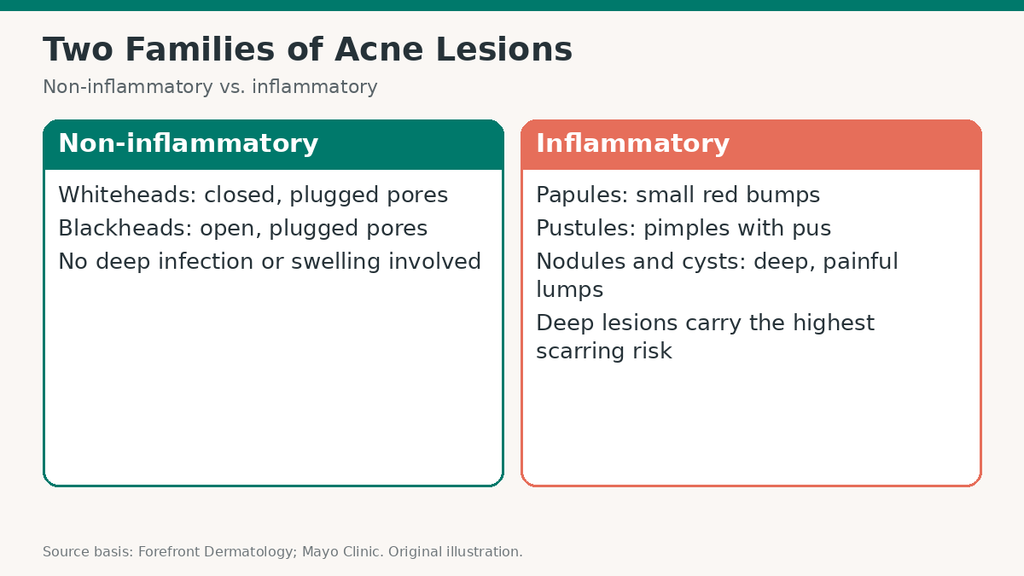
Dermatology practices group acne lesions into two families. Whiteheads and blackheads belong to the non-inflammatory group, while papules, pustules, nodules and cysts are inflammatory. Many people carry several lesion types at the same time, which is one reason a single product rarely fixes everything.
Source: Forefront Dermatology
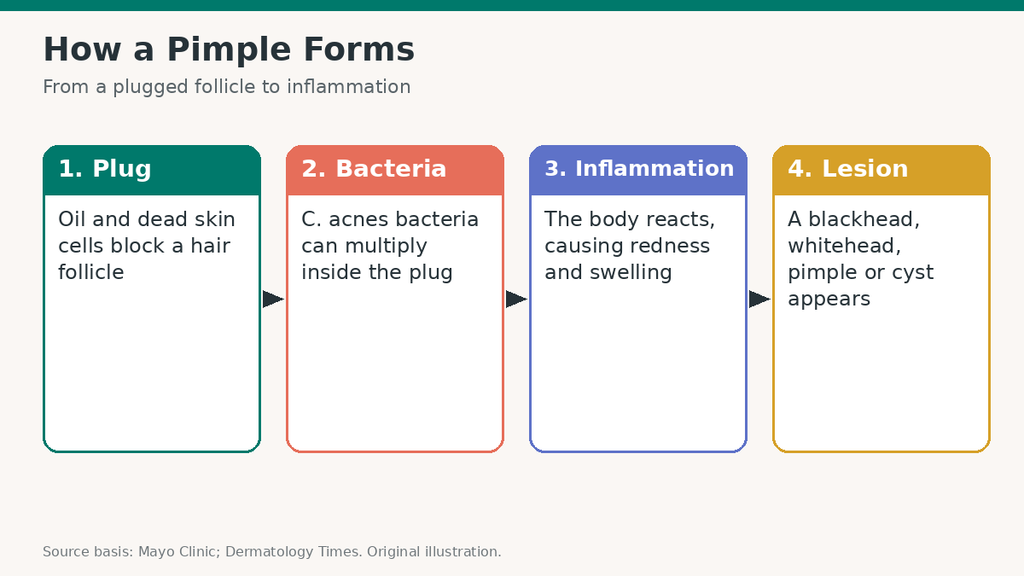
Understanding how a pimple forms explains why the types differ. Researchers describe three core processes: a hair-follicle disorder that blocks the duct, growth of the bacterium Cutibacterium acnes, and inflammation. When bacteria add to a plugged follicle, the reaction can turn a simple blockage into a more severe, inflamed lesion.
Sources: Dermatology Times; Mayo Clinic
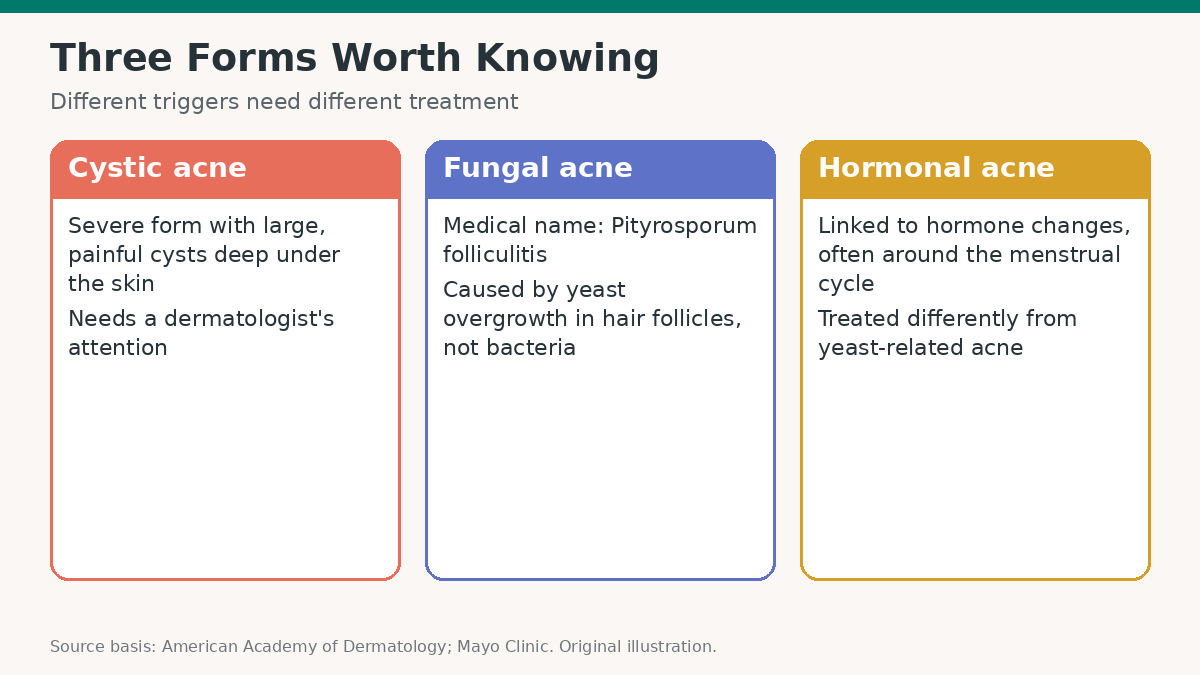
Deep lesions deserve extra attention. Cystic acne is the most severe form: large, painful cysts develop when oil and dead skin cells accumulate deep inside follicles. Dermatology sources also note that deep inflammatory lesions carry the greatest risk of permanent scarring compared with other types.
Sources: Mayo Clinic; Forefront Dermatology; American Academy of Dermatology
Not every breakout is bacterial. So-called fungal acne, medically known as Pityrosporum folliculitis, comes from an overgrowth of yeast inside hair follicles, so it behaves differently from classic acne. A board-certified dermatologist can tell the two apart, which matters because the treatments are not interchangeable.
Source: American Academy of Dermatology
Hormonal acne is the third pattern many readers recognize. It usually tracks changes in hormone levels, especially around the menstrual cycle, and Mayo Clinic notes that flares are common about a week before menstruation. Because the trigger is different, treatment for hormone-related acne can look very different from care for yeast-driven breakouts.
Sources: American Academy of Dermatology; Mayo Clinic
Some skin problems only look like acne. Dermatology groups warn, for example, that rashes around the mouth can be perioral dermatitis rather than true acne, and such conditions often fail to respond to over-the-counter acne products. If a product has not helped after consistent use, a professional diagnosis can save time.
Source: Forefront Dermatology
Medical note: This article summarizes public health information and does not replace advice from a licensed clinician.
Leave a Reply