Adult acne in women surprises many people. After all, pimples are usually linked with the teenage years. However, dermatologists see acne in women in their twenties, thirties, forties and beyond. In some cases it even appears for the first time in adulthood, which doctors call adult-onset acne.
Sources: AAD – Adult acne
Research supports what many women notice in the mirror. In a University of Alabama at Birmingham survey of 1,013 people, about 51% of women in their twenties reported acne, compared with about 43% of men. Moreover, the gap persisted later in life: roughly 26% of women in their forties reported acne, against 12% of men. Researchers suggested that fluctuating hormones may explain the difference.
Sources: AAD adult acne study (Informa)
Why Adult Acne in Women Is So Common
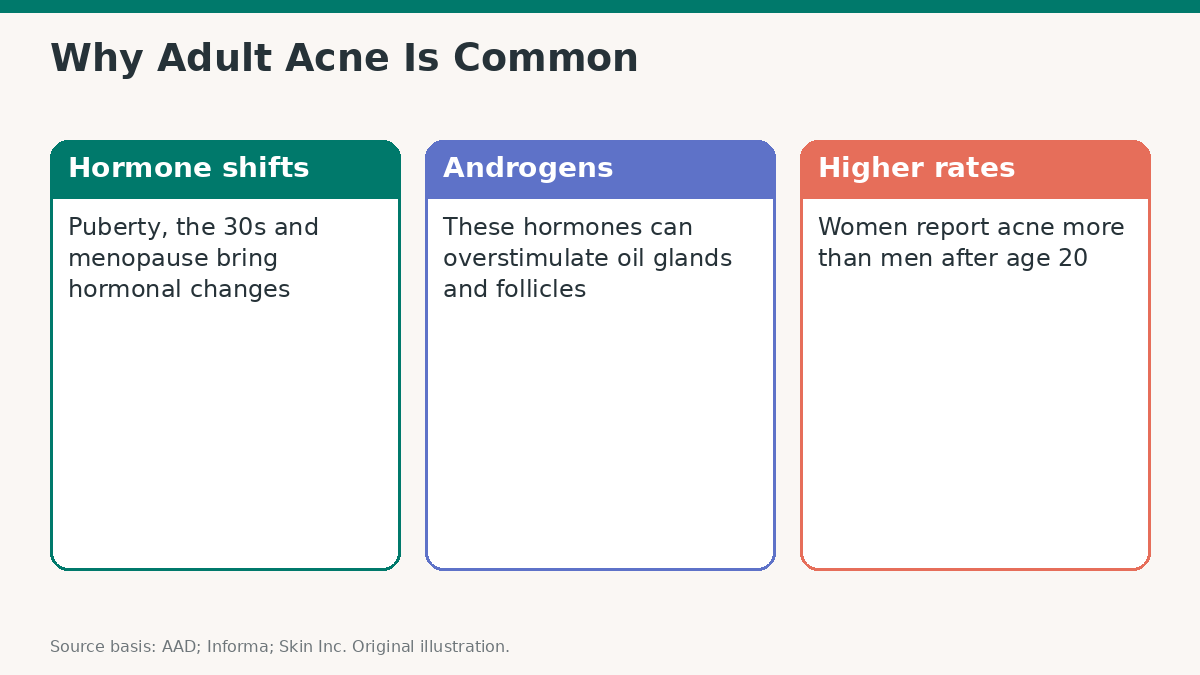
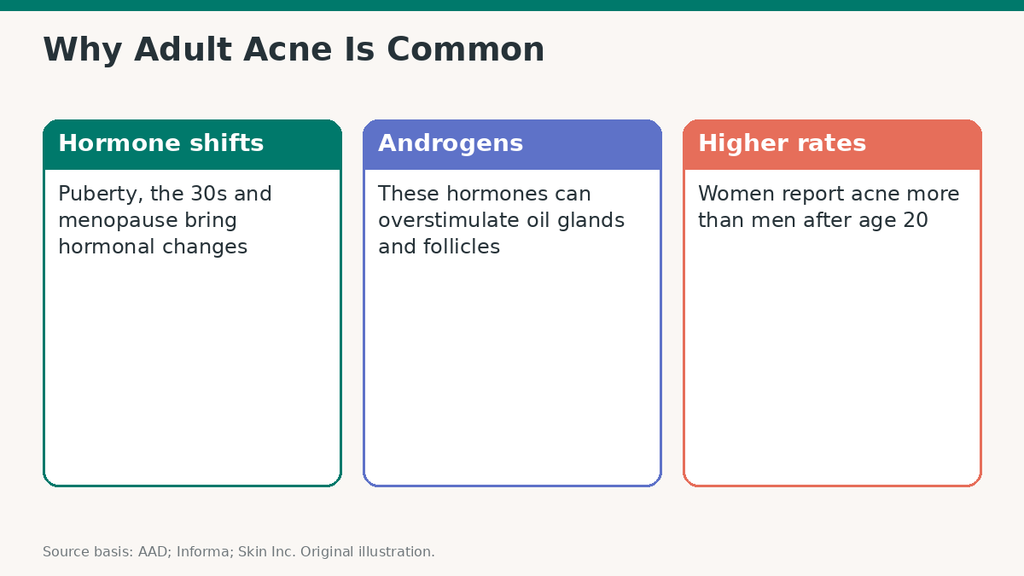
Hormones usually sit at the center of the story. Dermatologists explain that women pass through hormonal changes at puberty, again in their 30s and at menopause. As a result, skin changes can also follow pregnancy or stopping hormonal birth control. In addition, adult women often develop a different pattern and kind of acne than teenagers do.
Sources: AAD experts: persistent adult acne in women
Androgens, the so-called male hormones present in every woman, play a major part. When they overstimulate the oil glands and hair follicles, hormonal flares can occur. Furthermore, a dermatologist speaking at an AAD meeting noted that androgen levels rise as women age. She also stressed that the reasons behind the growing number of adult cases are probably multifactorial.
Sources: AAD summer meeting via Skin Inc.; Dr. Bethanee Schlosser, AAD meeting report
Why Teen Treatments Often Fail Adults
Many women assume the products that worked in high school will work again. Unfortunately, the AAD points out that a treatment that cleared acne during the teen years can be useless in adulthood, or can even make acne worse. Some women therefore wonder whether their blemishes are really acne at all. A dermatologist can confirm the diagnosis and adjust the plan.
Sources: AAD – Adult acne
Food and drink can play a smaller supporting role. The AAD reports that acne may be linked to inflammation caused by spikes in blood sugar. In addition, alcohol and spicy foods can trigger rosacea, a condition that causes redness and pimples in the center of the face, especially in fair-skinned and menopausal women. Because rosacea can mimic acne, correct identification matters.
Sources: AAD experts: persistent adult acne in women
Other Triggers Worth Knowing
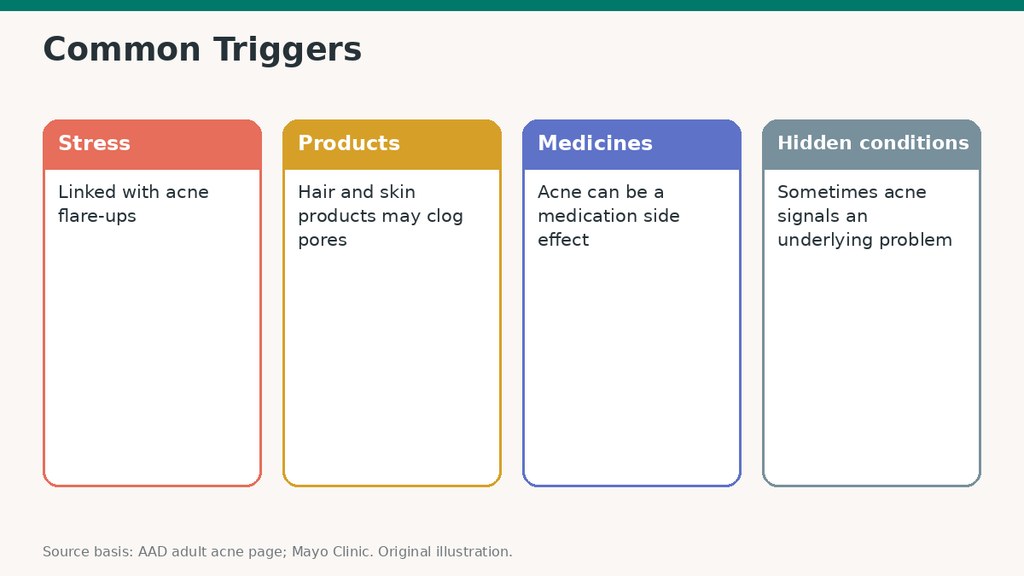
Hormones are not the only factor. According to the American Academy of Dermatology (AAD), adult acne may also relate to stress, pore-clogging hair or skin care products, and side effects of certain medicines. A genetic predisposition can raise the odds as well. Therefore, reading product labels and asking a doctor about your medications are both sensible steps.
Sources: AAD – Adult acne
Occasionally, acne points to something deeper. The AAD notes that an undiagnosed medical condition can sometimes be the cause, and that acne often clears once that condition is treated. Similarly, Mayo Clinic warns that sudden severe acne in an older adult may signal an underlying illness that needs medical attention.
Sources: AAD – Adult acne; Mayo Clinic
When Hormone Testing Makes Sense
Most women with acne have normal androgen levels. Even so, AAD-reported guidance recommends hormonal testing when acne comes with excess facial or body hair, a deepening voice, or irregular or infrequent periods. These signs can point to a hormonal cause, so they deserve a medical conversation rather than another over-the-counter product.
Sources: AAD via ScienceDaily; Dr. Bethanee Schlosser, AAD meeting report
Treatment Options for Adult Acne in Women
Treatment depends on the type of acne and on skin type. For example, adult skin tends to be drier, so topical acne medicines can irritate more. Some women also show signs of rosacea, which makes certain topical products harder to tolerate. Consequently, a dermatologist usually tailors the plan rather than recommending one product for everyone.
Sources: AAD via ScienceDaily; AAD advice via Skin Inc.
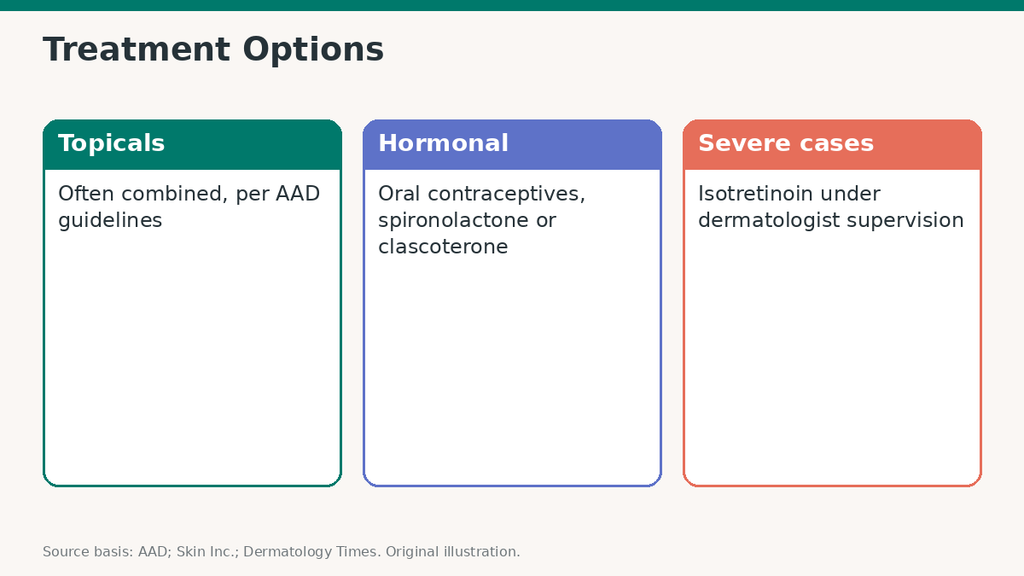
Hormonal therapy is a well-studied option. Oral contraceptives can clear acne in adult women, either alone or together with an anti-androgen such as spironolactone. The oral contraceptives approved by the FDA for acne combine ethinyl estradiol with norgestimate, norethindrone acetate or drospirenone. However, many people should not use oral contraceptives, so careful screening and regular monitoring are essential.
Sources: AAD advice via Skin Inc.; AAD via ScienceDaily
The updated AAD guidelines also mention topical clascoterone, which targets hormonal causes, and recommend combining several types of topical medication. For severe or stubborn acne, the guidelines point to isotretinoin. Dermatology Times adds that this drug is powerful and carries a history of side effects, so appropriate precautions apply. Some women whose acne resists standard medicines may also consider laser or light therapy.
Sources: AAD guideline update; Dermatology Times; AAD advice via Skin Inc.
Adult Acne in Women and Menopause
Menopause deserves its own mention. According to the AAD, adult-onset acne is most common among women going through menopause. Birth control pills or hormone therapy may help regulate hormones and control acne related to hormonal changes, so women in this stage should discuss options with their doctor rather than guess.
Sources: AAD – Adult acne; AAD experts: persistent adult acne in women
Dermatologists decide on hormonal therapy after a physical examination, a review of the patient’s medical history and an assessment of how earlier treatments worked. Although there is no cure for acne, hormonal therapies can help some women with bothersome adult breakouts. Combination oral contraceptives can be very beneficial in appropriately selected women, and several formulations have shown effectiveness in clinical studies.
Sources: AAD summer meeting via Skin Inc.
There is also a pleasant side effect of tailored care. Some proven therapies for adult acne additionally help with the early signs of aging that many women notice. As a result, a dermatologist can often design one routine that addresses both concerns at once.
Sources: AAD advice via Skin Inc.
Daily Habits That Support Treatment
Good habits make medical treatment work better. AAD experts advise against overusing acne products, because irritation can worsen breakouts. In addition, dermatologists suggest washing the face up to twice a day, choosing gentle, alcohol-free products, and picking items labeled non-comedogenic, since these are least likely to cause acne.
Sources: AAD advice via Skin Inc.; AAD – Tips for managing acne; AAD – Adult acne
Sun protection matters too. The AAD recommends a broad-spectrum, water-resistant sunscreen with SPF 30 or higher, and it warns that tanning can worsen acne. Furthermore, some acne medicines make skin more sensitive to ultraviolet light, which is another reason to use sunscreen consistently.
Sources: AAD – Tips for managing acne
Key Takeaways on Adult Acne in Women
- Adult acne in women is common and is often influenced by hormones.
- Stress, products, medicines and medical conditions can also play a part.
- Treatments range from gentle topicals to hormonal therapy, depending on the case.
- A dermatologist can tailor care, so seek help if nothing clears your skin.
Sources: AAD – Adult acne; AAD experts: persistent adult acne in women; AAD advice via Skin Inc.
Patience and When to See a Dermatologist
Finally, set realistic expectations. A dermatologist presenting at an AAD meeting emphasized that there are no quick fixes and that no acne therapy works overnight. Consistency over several weeks is therefore part of the plan.
Sources: Dr. Bethanee Schlosser, AAD meeting report
If nothing clears your breakouts, book a visit with a board-certified dermatologist. The AAD states that effective treatment exists for adult acne. Early professional care can also lower the risk of scarring and protect your confidence.
Sources: AAD – Adult acne; AAD – Acne scars
Related reading: Types of Acne · Acne Treatment Options
Medical note: Educational content only, not medical advice. Consult a licensed healthcare professional.
Leave a Reply