Educational summary of published guidance. Always follow your clinician’s advice.
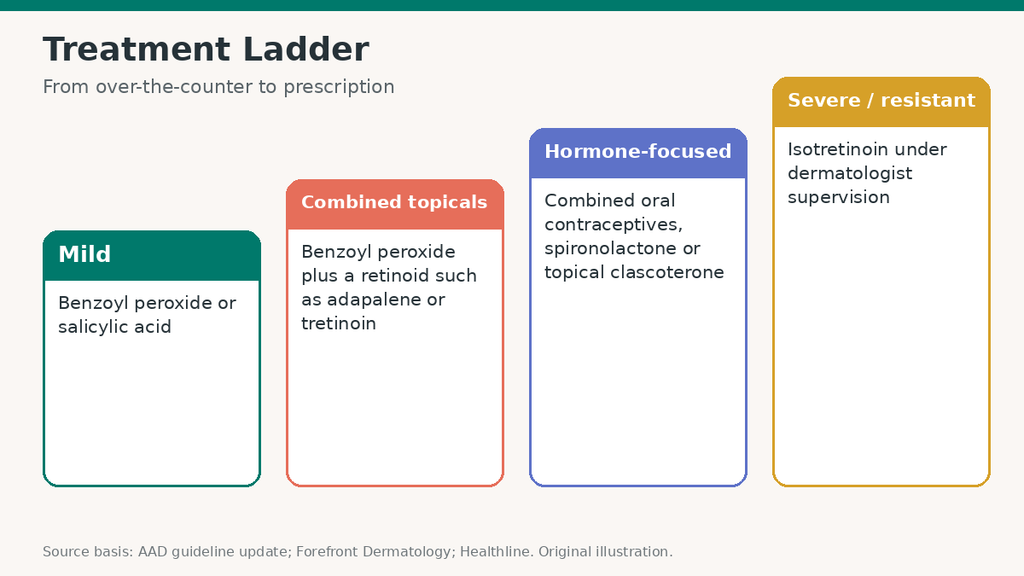
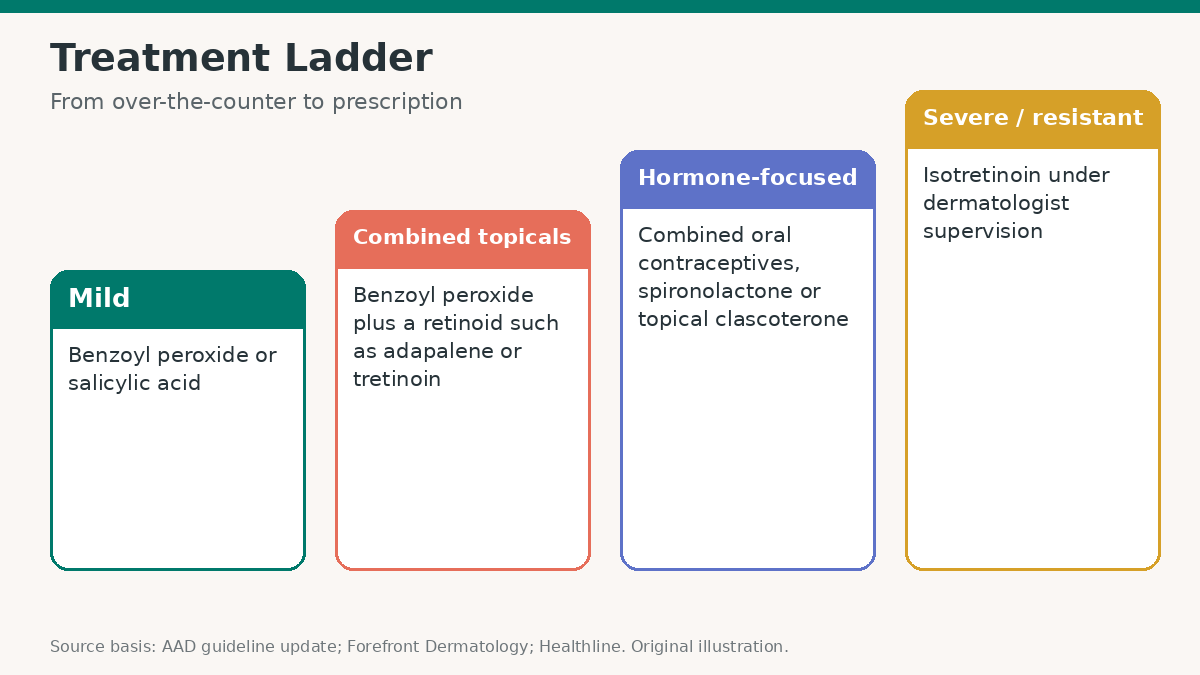
Acne treatment is not one-size-fits-all. Dermatology sources stress that the right plan depends on the type of acne a person has and how severe it is. The American Academy of Dermatology (AAD) published updated guidelines with 18 evidence-based recommendations covering topical, systemic and physical treatments, plus five good practice statements.
Sources: Forefront Dermatology; American Academy of Dermatology
For milder breakouts, over-the-counter ingredients are the usual starting point. Benzoyl peroxide and salicylic acid are commonly suggested for pimples and blemishes, and benzoyl peroxide can also be used as a spot treatment for clusters of whiteheads. Dermatology Times describes benzoyl peroxide as an excellent option that helps dry up lesions.
Sources: Forefront Dermatology; Dermatology Times
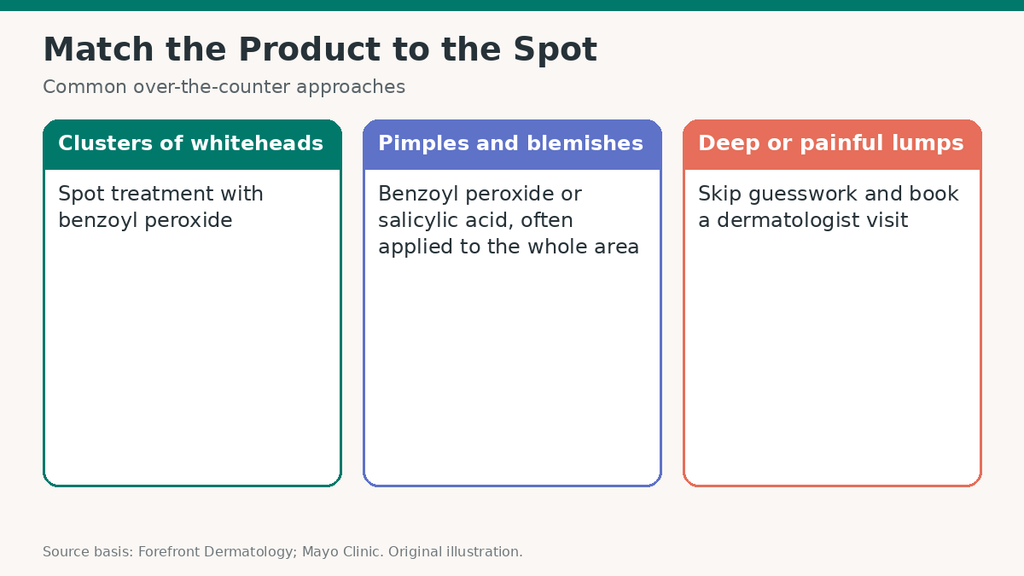
Combining treatments can work better than using one product alone. The AAD guidelines recommend combining several types of topical medication, and a health-information source reports that combining benzoyl peroxide with a retinoid such as adapalene or tretinoin can address different acne types at once.
Sources: American Academy of Dermatology; Healthline
Hormone-focused options are available for some patients. The updated AAD guidance mentions topical clascoterone, which targets hormonal causes, along with combined oral contraceptives and spironolactone. These are prescription options, so they require a clinician’s assessment.
Source: American Academy of Dermatology
For severe or stubborn acne, stronger therapy exists. The AAD guidelines recommend isotretinoin for severe acne or for people who have failed standard topical or oral therapy. Dermatology Times adds that it is powerful, has a history of side effects, and should be used with appropriate cautions, including in severe nodular acne and in cases causing scarring or psychosocial distress.
Sources: American Academy of Dermatology; Dermatology Times
Evidence does not support every popular ingredient. The same Dermatology Times report notes the academy found limited evidence for sulfur, nicotinamide, resorcinol, sodium sulfacetamide, aluminum chloride and zinc in acne treatment. That is a useful reminder to ask a professional before relying on trending products.
Source: Dermatology Times
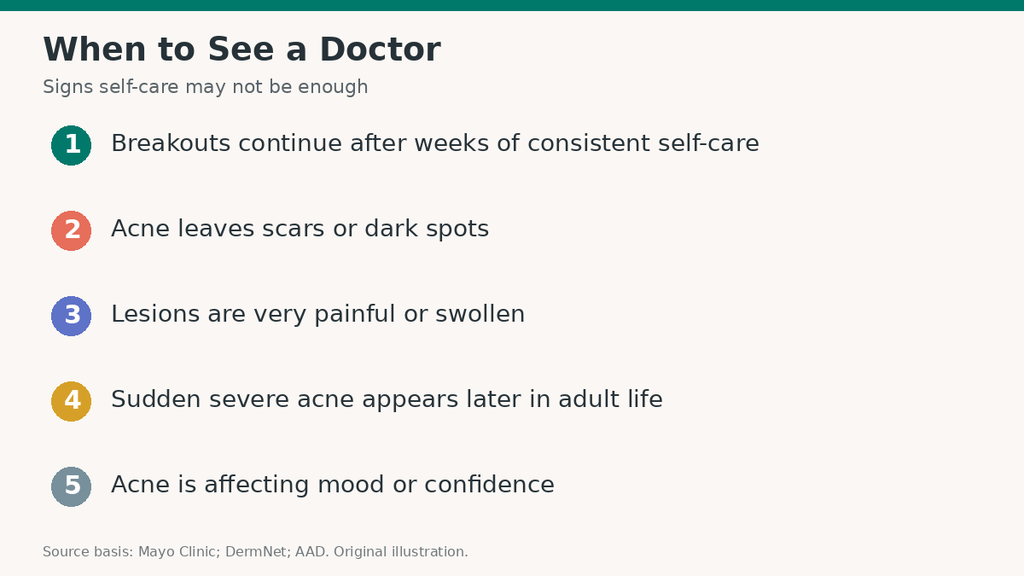
Patience matters. Acne takes time to clear, and the AAD advises that people who keep seeing breakouts after consistent self-care should partner with a board-certified dermatologist. Mayo Clinic similarly recommends seeing a primary care doctor if self-care remedies do not clear acne.
Sources: American Academy of Dermatology; Mayo Clinic
Medical note: Prescription treatments need professional supervision. This article does not recommend any specific product or dose.
Leave a Reply