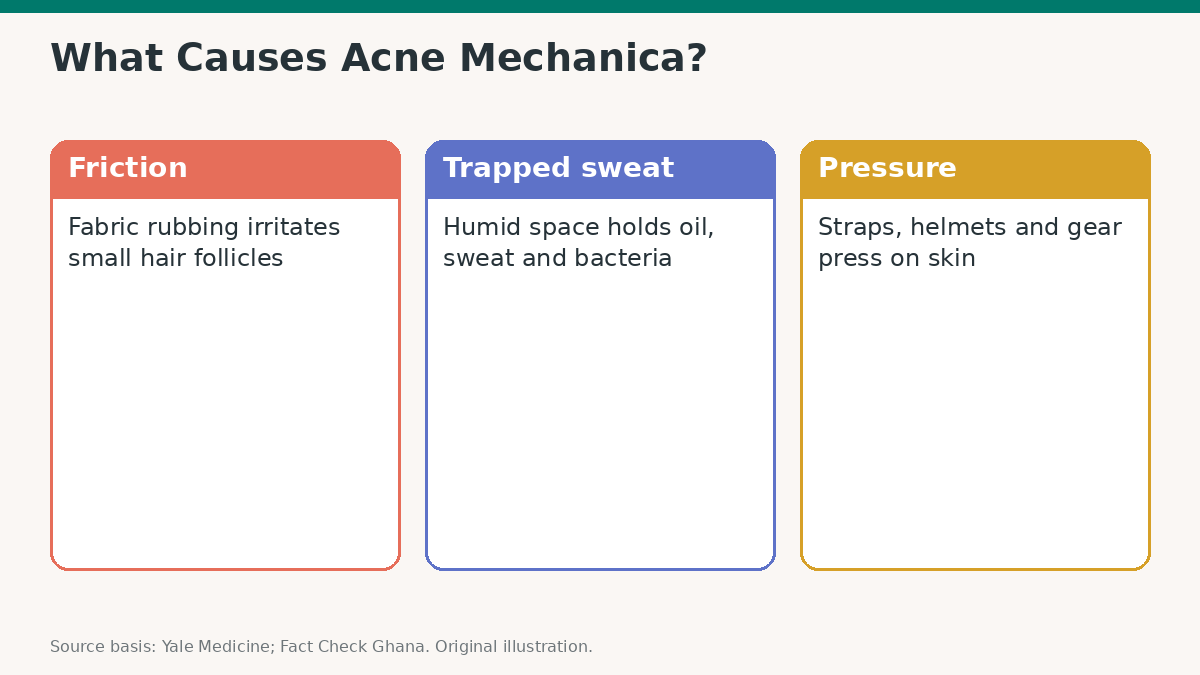
Acne mechanica is a type of acne caused by friction, pressure, heat and trapped sweat. It became famous as “maskne” when face coverings became part of daily life. However, the condition is not new. Before the pandemic, dermatologists mostly saw acne mechanica in athletes and workers who wear helmets and chin straps.
Sources: Yale Medicine; Manila Bulletin – Maskne
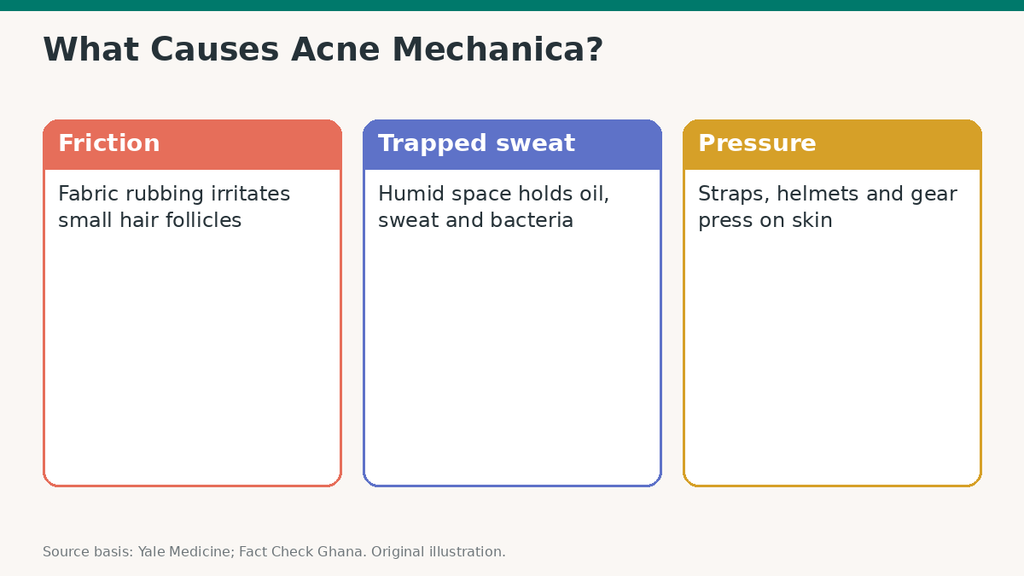
Understanding the mechanism helps you prevent it. When a mask or strap rubs against the skin, it can irritate small hair follicles. As a result, inflammation starts and acne develops. A dermatologist at Mount Sinai explained that hair follicles on the face, chest and back all react this way when friction and pressure build up.
Sources: Yale Medicine; KSL – Maskne tips from Dr. Whitney Bowe; Fact Check Ghana (quoting Dr. Zeichner)
How Acne Mechanica Develops
Three ingredients usually combine. First, friction from fabric or equipment. Second, a humid space under the covering, where breathing raises temperature and moisture. Third, trapped oil, sweat and bacteria. Dermatologists say this mix is likely behind whiteheads, red bumps and pustules in the covered area.
Sources: Fact Check Ghana (quoting Dr. Zeichner); Yale Medicine
In addition, the skin barrier suffers. Constant rubbing can damage the outer protective layer of the skin, which makes it more sensitive to further irritation. Consequently, a vicious cycle can start: irritated skin breaks out more, and treatments irritate it even further.
Sources: Fact Check Ghana (quoting Dr. Zeichner); KSL – Maskne tips from Dr. Whitney Bowe
Unlike acne driven mainly by hormones, acne mechanica has an obvious outside trigger. Because friction, sweat and trapped oil are involved, practical changes to coverings and routines can address the cause directly. That is why prevention tends to work well, and why simple habits deserve attention before expensive products.
Sources: Yale Medicine; Fact Check Ghana (quoting Dr. Zeichner)
Who Gets Acne Mechanica?
Anyone can. Athletes who wear helmets, chin straps and protective pads have long been familiar with it. Likewise, workers in protective equipment and people wearing masks for long hours face the same friction. Some people who never had breakouts before suddenly develop them, which surprises them.
Sources: Yale Medicine; KSL – Maskne tips from Dr. Whitney Bowe
Other rashes can look similar. Yale dermatologists also saw periorificial dermatitis, a rash on the rosacea spectrum around the mouth and nose, in patients who wore masks. Therefore, a professional diagnosis is useful when ordinary acne products do not help.
Sources: Yale Medicine
Why Face Coverings Irritate the Skin
Breathing in and out raises the temperature and humidity around the covered area. At the same time, constant friction harms the skin’s outer protective layer. Dermatologists therefore describe face coverings as creating a humid environment that traps sweat, oil and bacteria.
Sources: Fact Check Ghana (quoting Dr. Zeichner)
Besides acne, masks and shields can trap dirt, oil and sweat that irritate the skin further. They may even trigger flares of eczema and rosacea. This is why a rash under a mask is not always simple acne, and why a professional opinion helps when symptoms look unusual.
Sources: Project Vanity – Dr. Nikki Paderna; Yale Medicine
How to Prevent Acne Mechanica
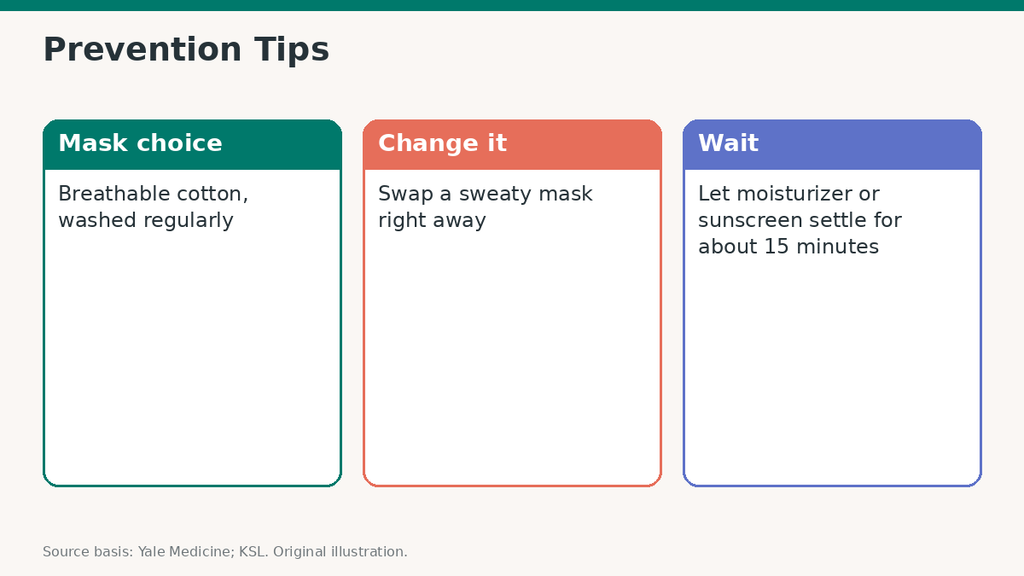
Start with the covering itself. Yale dermatologists describe a breathable cotton mask that you launder regularly as ideal. Another dermatologist urges washing cloth masks daily, since even a freshly cleansed face meets trapped oil and dirt again when you reuse a dirty mask.
Sources: Yale Medicine; Manila Bulletin – Maskne; Project Vanity – Dr. Nikki Paderna
Sweat control is the next step. If you exercise or sweat while wearing a mask, change to a fresh, clean one right away. Moreover, advice from a Mount Sinai dermatologist is to wait about 15 minutes after applying moisturizer or sunscreen before putting a mask on, and about 30 minutes with an N95 mask.
Sources: KSL – Maskne tips from Dr. Whitney Bowe
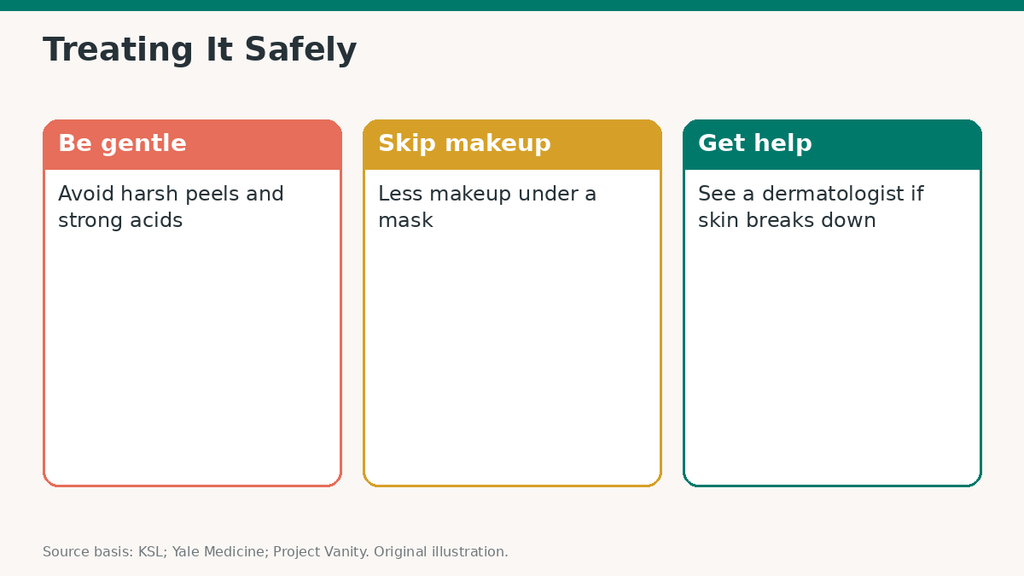
Fit and handling matter as well. Avoid masks that are too tight, and touch the mask with your hands as little as possible. If your skin is oily, oil-free wipes or blotting papers can remove excess oil and sweat during the day. Additionally, removing makeup under a mask can reduce congested pores.
Sources: Fact Check Ghana (quoting Dr. Zeichner); Project Vanity – Dr. Nikki Paderna
Everyday Skin Care Under a Mask
A gentle routine protects the skin barrier. As soon as you get home and remove the mask, wash away the sweat, oil and dirt that built up during the day. Moreover, the right moisturizer before wearing a mask reduces irritation and supports a healthy barrier.
Sources: Project Vanity – Dr. Nikki Paderna
Stress can complicate the picture. Yale dermatologists remind patients that stress affects hormone levels, which can make acne and other conditions flare. Consequently, a flare under a mask is sometimes a mix of friction, sweat and tension rather than one single cause.
Sources: Yale Medicine
Be careful with self-treatment. One dermatologist in the Philippines warned against reaching for salicylic acid or clindamycin products on mask-related breakouts without guidance, because acne treatments can irritate skin that is already dealing with constant rubbing. These products should be used under a dermatologist’s care.
Sources: Manila Bulletin – Maskne
Treating Acne Mechanica Without Making It Worse
Treatment needs extra care. A dermatologist warned that powerful products, such as alpha hydroxy acids, chemical peels or strong retinoids, can further damage a fragile skin barrier. Yale specialists add that typical acne medicines often fail on maskne, and that retinoids may help but can irritate skin that a mask keeps rubbing.
Sources: KSL – Maskne tips from Dr. Whitney Bowe; Yale Medicine
After you remove a mask, wash away the sweat, oil and dirt trapped on the skin. A suitable moisturizer before wearing the mask can lower irritation and help maintain a healthy barrier. In other words, gentle care beats aggressive treatment.
Sources: Project Vanity – Dr. Nikki Paderna
Acne Mechanica: Quick Answers
Is acne mechanica the same as maskne? Yes. Maskne is the popular name for acne mechanica caused by a face covering rubbing against the skin.
Sources: Yale Medicine
Does it only affect the face? No. Hair follicles on the face, chest and back can all react to friction and pressure from masks or protective equipment.
Sources: KSL – Maskne tips from Dr. Whitney Bowe; Fact Check Ghana (quoting Dr. Zeichner)
Can I treat it myself? Mild cases may improve with prevention and gentle care. Nevertheless, severe or persistent acne mechanica deserves a dermatologist’s evaluation, because typical acne medicines often fail and retinoids can irritate.
Sources: Yale Medicine; KSL – Maskne tips from Dr. Whitney Bowe
- Choose breathable, clean masks and straps.
- Change sweaty coverings promptly.
- Wash gently and moisturize.
- Avoid harsh peels and strong acids.
Sources: Yale Medicine; KSL – Maskne tips from Dr. Whitney Bowe; Project Vanity – Dr. Nikki Paderna
When to See a Dermatologist
Seek professional advice if acne mechanica is severe, persistent or getting worse. In the same way, talk to a board-certified dermatologist if you notice skin breakdown, ulcers or erosion from protective equipment, because prescription products can help. Yale specialists note that there are options for acne and rosacea-type conditions, some even available over the counter.
Sources: KSL – Maskne tips from Dr. Whitney Bowe; Yale Medicine; Manila Bulletin – Maskne
In short, acne mechanica is common, understandable and manageable. Reduce friction, control sweat, keep coverings clean and treat the skin gently. Then, if breakouts continue, a dermatologist can tailor a plan to your skin.
Sources: Yale Medicine; KSL – Maskne tips from Dr. Whitney Bowe
Related reading: Types of Acne · Acne Treatment Options
Medical note: Educational content only, not medical advice. Consult a licensed healthcare professional.
Leave a Reply